Tech Trends Roundtable: Camera Technology — The Future of 4K UHD
Manufacturer execs discuss support for formats, customer preferences and choices
Story Highlights
SVG invited the major players in broadcast cameras to participate in a roundtable to discuss the trends addressed by their respective camera technologies: Blackmagic Design, Grass Valley, Ikegami, KOKUSAI DENKI Electric (formerly Hitachi Kokusai Electric), RED Digital Cinema, and Sony Electronics. Their responses are in alphabetical order out of an abundance of fairness.
Although consumers of sports and other programming have been purchasing 4K UHD flat-screen TVs for years, there are still issues with delivering pristine 4K images to the home, depending on distribution medium, the consumer’s equipment, and internet service. However, those consumers have never before seen the image quality that they can see today, even if it’s not in 4K. Truth be told, many 4K TV owners have never seen 4K content on their TVs. Even if they had, they don’t have a way to compare two formats at the same time.
This raises a similar question to that raised at the advent of HD: is 3G/HD with HDR “good enough” compared with 4K with HDR in the same way that many saw 720p (even 480p) as “good enough” versus 1080i?
What format(s) are your sports customers (studio, compact, PTZ) asking for, and how are you promoting that format (or formats) for sports production?

Blackmagic Design’s Bob Caniglia: “Although the constraints of traditional transmission for the networks do not always allow for 4K UHD; those customers are able to achieve high image quality by implementing 1080p 3G HDR workflows even though some will transmit 1080i.”
Blackmagic Design (Bob Caniglia, director, sales operations, Americas): Customers who are shooting live sports are all about high frame rates because live sports environments are so dynamic and fast-paced. Lower frame rates result in motion blur, whereas shooting in high frame rates allows customers to capture key moments in greater detail, even if a viewer’s television isn’t the latest and greatest 4K TV. Blackmagic Design’s cameras can output both 4K UHD and 1080p 3G HDR at 60 fps, giving users the flexibility they need for a variety of situations. In fact, our URSA Broadcast G2 camera not only supports the higher broadcast frame rate of 60 fps but can also record this high frame rate into lower-frame-rate projects for smooth slow-motion playback.
Grass Valley (Klaus Weber, director, product marketing): Our customers typically know which format best suits their productions, whether it’s 1080i SDR, 1080p, or UHD HDR. Each format offers its own strengths and limitations, including differences in cost. We focus on helping customers find the optimal solution for their unique requirements, rather than promoting a specific format. Many customers currently working in standard HD and SDR are exploring upgrade paths to 1080p or even native-UHD resolution, as well as HDR compatibility across all major standards and WCG for their future camera investments.
For several years now, major international sporting events like the Olympics, football World Cups, and Formula 1 have been produced entirely in UHD. However, this doesn’t necessarily mean that most consumers receive the broadcasts in UHD; the higher resolution is often intended for special pay-tv channels and archiving purposes. For more regionally focused productions, the situation can be quite different; 1080p can fully meet all requirements and deliver highly satisfactory quality.
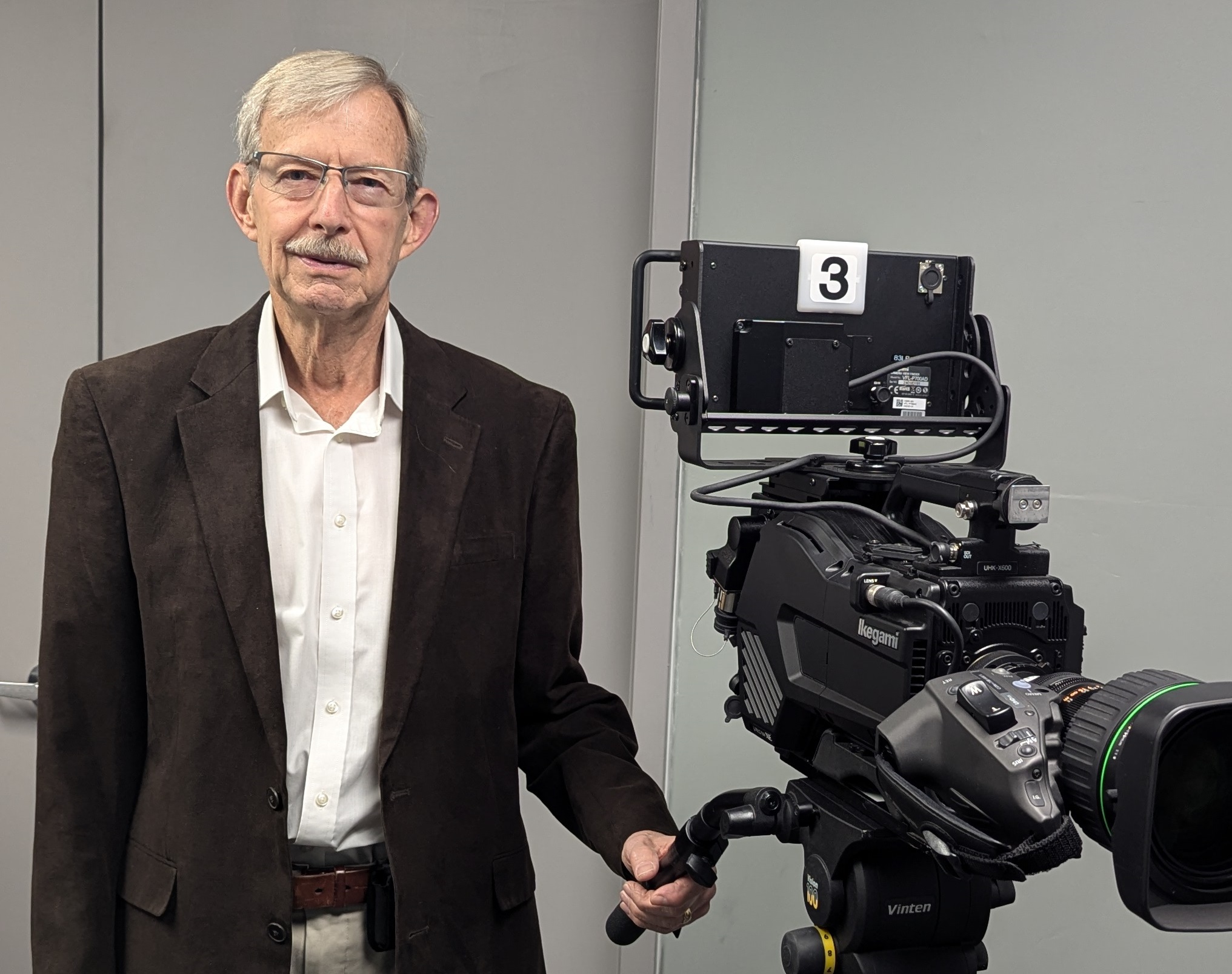
Ikegami Electronics USA’s Alan Keil: “It is understood that 2160p is four times the data rate, which poses some challenges. But these challenges fall almost exclusively outside of the camera system itself.”
Ikegami Electronics USA (Alan Keil, VP/director, engineering): All our broadcast cameras are multiformat, and we listen to our customers regarding their format of preference. If we are demonstrating equipment without specific knowledge of a customer’s preferred format, we will typically demonstrate in the format offering the highest resolution: 1080p if it’s an HD-only camera, 2160p if it’s a UHD camera. We have been bullish on 1080p/59.94 Hz since we introduced CMOS cameras capable of this format about 20 years ago. Several years ago, we demonstrated PQ HDR; these days, we are proponents of HLG HDR for live sports.
KOKUSAI DENKI Electric (Kenneth Cyr, national sales manager): Our primary focus is on 1080p at this point in sports production. However, it is the ability to offer a “future-proofed” solution that is very important for today’s customers. Customers are not allocating funding like before and must maintain camera systems for eight to 10 years in most cases. If you can offer the ability to purchase 1080p today with the option to upgrade (via license) to 4K or slow motion, they feel their investment can stand the test of time. Pair that with the ability to add ST 2110 output boards, and you can offer a solution that is looking toward the future if ever needed.

RED Digital Cinema’s Jeff Goodman: “Although 1080p remains the most utilized format for live broadcasts due to its ideal balance of cost and quality, the 8K resolution ensures that customers retain full postproduction quality.”
RED Digital Cinema (Jeff Goodman, VP, product management): RED understands that both 4K UHD and 1080p have their place in sports production, and we focus on providing the most flexible cinematic cameras on the market to meet the diverse needs of our customers. Our goal is to offer solutions that integrate seamlessly into existing workflows while giving our customers the flexibility to choose the best format for their specific requirements.
For studio productions, we are excited to offer the upcoming Cine-Broadcast Module, which will enable our customers to transmit dual 12G-SDI feeds via a standard SMPTE cable. This provides easy, drop-in compatibility with existing baseband workflows, allowing smooth transition and integration into traditional broadcast environments. Whether working in 4K UHD or 1080p, our customers have the freedom to choose the resolution that best fits their production needs without being locked into one format.
When it comes to compact cameras, we recommend using the V-RAPTOR [X], paired with a wireless video transmitter for flexibility in the field. The V-RAPTOR [X] features dual 12G-SDI outputs, providing full flexibility in terms of format choice. Whether capturing in UHD or FHD, the camera offers versatility and doesn’t restrict the customer to a single resolution. This ensures that compact camera setups can adapt to a wide range of production scenarios, from live sports coverage to dynamic, on-the-go shooting.
For PTZ cameras, we’ve partnered with industry leaders like Mark Roberts Motion Control and Mo-Sys to provide customers with powerful remote-control capabilities. Our cameras integrate seamlessly with these companies’ systems, ensuring smooth control over both the PTZ movement and camera settings. With the ability to switch between UHD and FHD formats, our PTZ solutions provide the flexibility to scale production quality without being confined to a specific resolution.
Overall, our cameras and workflows are designed with versatility in mind, allowing customers to select the best format for their specific needs — whether in studio, for compact setups, or in PTZ configurations. By providing both UHD and FHD options, we give our customers the freedom to choose the ideal resolution while maintaining seamless integration and control throughout their production.

Sony Electronics’ Robert Willox: “Cameras will always be first to move to a higher resolution, allowing the current resolutions to be output while the rest of the infrastructure to support it either is deemed as not cost-effective or manufactured soon after.”
Sony Electronics (Robert Willox, director, business management, imaging solutions): For national-level sports production, the resolution bar is generally set at 1080p to produce at the quality level expected by the leagues. 1080p is the lowest common denominator for all our camera systems, whether camcorder, studio, or PTZ. We were first to feature 1080p imaging in our studio cameras with the HDC-1500, which created beautiful and switchable 720p and 1080i pictures from the same camera. Today, we largely derive 1080i and 720p images from our 2/3-in. or S35mm UHD imagers (we still offer a 1080p imager in a value-based HD camera largely used by P&I and regional stations). The HDC-4300 and matched P43 box camera were the first in the market that gave the customer the best of any HD format, up to 8X HD SuperMotion, HDR/SDR imaging, and a software-only path to UHD. We then introduced the global shutter CMOS HDC-3500/5500 series and a new interchangeable digital triax system that allows 1080p HDR/SDR in a venue’s triax (and there are quite a few). The camera’s transmission adapter could be changed to fiber in a matter of moments. We also took imagers from our cinematography systems and used them on a 16X HD and 8X UHD camera system that creates stunning replays as well as pan-and-scans.
Are your camera customers bringing up objections or desires for specific formats? If so, what are they, and are they more weighted to one over the other?
Blackmagic Design: Customers from universities prefer UHD because they want the highest resolution possible. Although the constraints of traditional transmission for the networks do not always allow 4K UHD; those customers are able to achieve high image quality by implementing 1080p 3G HDR workflows even though some will transmit 1080i.

Grass Valley’s Klaus Weber: “UHD with HDR/WCG provides the highest picture quality and future-proofs content, becoming increasingly standard for large-scale international sports productions, even though most viewers still receive a downconverted HD SDR signal.”
Grass Valley: There are compelling reasons to support both 1080p and UHD operations. For many, the fourfold increase in signal bandwidth required for native UHD is often seen as too costly relative to the modest visible gains for viewers at home. HDR, however, requires no additional bandwidth compared with SDR and delivers a clearly noticeable improvement in image quality for consumers, making 1080p HDR/WCG a popular compromise. That said, UHD with HDR/WCG provides the highest picture quality and future-proofs content, becoming increasingly standard for large-scale international sports productions, even though most viewers still receive a downconverted HD SDR signal. The option to upgrade to native UHD for limited timeframes offers an ideal solution for customers who typically produce in 1080p.
Ikegami: I am not aware of any objections to either 1080p or 2160p. It is understood that 2160p is four times the data rate, which poses some challenges. But these challenges fall almost exclusively outside the camera system itself.

KOKUSAI DENKI Electric’s Kenneth Cyr: “If you can offer the ability to purchase 1080p today with the option to upgrade (via license) to 4K or slow-motion, they feel their investment can stand the test of time. Pair that with the ability to add ST 2110 output boards, and you can offer a solution that is looking toward the future.”
KOKUSAI DENKI: We hear many customers asking the same question: Do I really need 4K? I can’t distribute the format.
We tend to push 1080p with the same technology built into the camera; however, it will output only up to 1080p. We can, however, offer HDR/SDR, BT.2020/709 color space, and multiformat all at a very affordable price. If you are willing to see that 1080p is as far as you are going to take your productions in the next five to 10 years, the price-to-performance we can offer is truly amazing for a 1080p production solution.
RED Digital Cinema: We do hear from our customers that 1080p is still the dominant format in broadcast environments, particularly when it comes to what broadcasters prefer to ingest for live sports and traditional broadcasts. Given this, some customers initially feel that 8K resolution might be excessive, especially when considering the demands of standard broadcast production.
However, we don’t push 8K in these broadcast settings. Instead, our focus is on providing flexibility. Our cameras, such as the RED Cine-Broadcast System, are equipped with SDI outputs up to 4K, but they can also easily downscale to 1080p. This allows our customers to work in the format most suited to their broadcast requirements, without the hassle of dealing with complex licensing or additional workflow complications.
Despite the popularity of 1080p, there are still clear advantages to using a RED cinematic camera with higher resolutions, like 8K. The beauty of our system is that, although 1080p remains the most utilized format for live broadcasts due to its ideal balance of cost and quality, 8K resolution ensures that customers retain full postproduction quality. The original 8K files provide incredible detail, and these can be used for future-proofing or for special events where higher resolution is required. This means that broadcasters can deliver cinematic 1080p content for daily broadcasts but still have access to 8K quality for those high-profile events or special projects without any loss in postproduction flexibility. In this way, the system adapts to both current needs and future growth, providing value in both everyday broadcasts and more-premium production scenarios.
Ultimately, although 1080p remains the most common format, customers appreciate the versatility and scalability our system offers, allowing them to meet both conventional broadcast needs and the growing demand for higher-resolution content.
Sony: What we learned from producers during the SD-to-HD transition is that you need more than just a studio camera. Directors are used to a [particular] toolkit and don’t want to give anything up for the sake of resolution or HDR. In the last few years, we have widened the choices of live UHD tools to include many new devices. Mid-range cinema cameras with their small footprint allow shallow–depth-of-field images from wireless Steadicam systems in conjunction with a 4K 2/3-in. box camera. We’ve added 4K full-frame imagers and 1-in. imagers for UHD 60p in relatively low-cost pan-and-tilt systems that have rapidly found their way into mainstream concerts and live events. The quality of the image, auto focus, and AI tracking in these cameras make them very exciting tools. We have new 4X 4K 2/3-in. systems in both shoulder and box systems designed to integrate into multi-vendor 4K OB workflows being deployed now just “for the big game.”
From a camera-head perspective, 4K is now a slight premium over HD cameras and is actually less in many cases than the HD-generation devices they are replacing. Native-UHD systems are available from Xperia in cellphones and shoulder camcorders, and our value HXC UHD line is used in corporate, education, and even large cable networks. The lens manufacturers have also developed an incredible lens armada for 2/3-in., S35mm, and full-frame camera systems. It is not uncommon to see 80X-120X lenses on many of the box-lens positions at live events. Exciting time indeed.
Where resolution is important is the choices made to feed the infrastructure available. Traditional broadcast-infrastructure requirements make UHD difficult [when it comes to] commercial insertion, storage, replay devices, and transmission-encoding requirements. These can be daunting and expensive. The excitement around HDR allowing broadcasters to have a secondary streaming service may be a larger issue than the resolution choice. And then there is IP and that pipeline to consider.
Infrastructure aside, even during a 1080p production, there will certainly be a mix of UHD and 1080p cameras. Within a 1080p broadcast, UHD cameras are used with pan-and-scan for replay or 8X HD/4X 4K applications. The resolutions are often used for “boundary” systems to show if player is in or out of bounds, offside, or safe at first. These “officiating” requirements demand a higher resolution for a closer look. [Some customers are] even looking potentially at 8K solutions for that application. 8K’s native 120p frame rate means that you have 16X the amount of data of 4K to deal with at 1X, and high frame rates obviously will be multiples of that. Those cameras will present themselves as a specialty device requiring a specific operation and bespoke equipment. This is not the desire for production.
Inversely, 1080p is playing a pivotal role for high-speed replay within UHD broadcasts. Directors now want to have multiple angles of 8X replay available to them, but UHD 8X would be a huge strain on the storage and infrastructure capability of the OB. Many of the high-speed systems for 4K (outside of the HDC-4800, which uses its own storage and server) are waiting on storage from the traditional replay manufacturers.
If your cameras allow both formats — 1080p HDR and 4K HDR — what is your technology supporting them? How does your sensor/imager handle each format, or is there one, native format with in-camera conversion? In other words, are both built into all cameras, or can one (or both) be licensed?
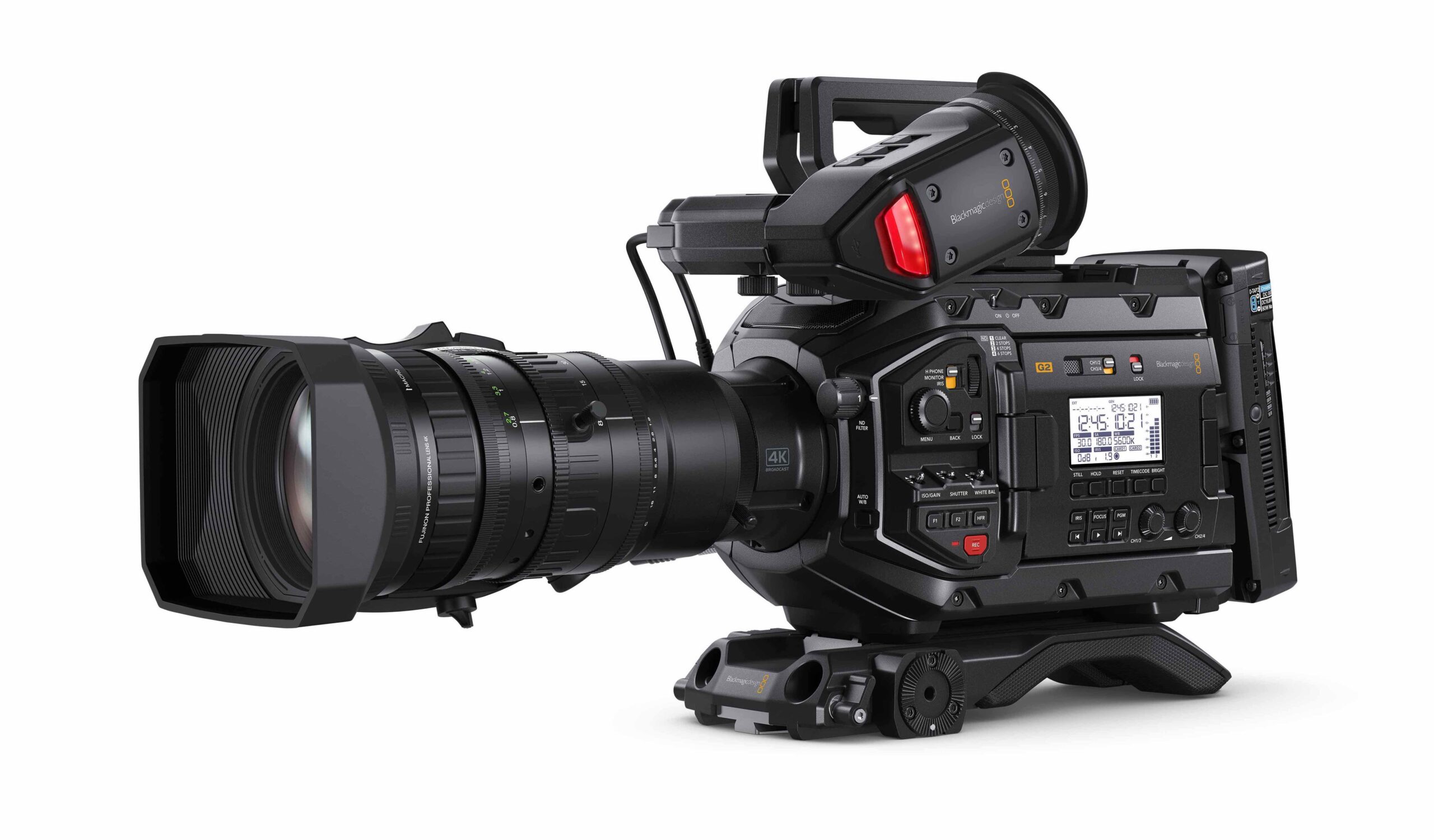
Blackmagic URSA Broadcast G2 supports higher frame rates of 60 fps and can shoot crystal-clear slow-motion video.
Blackmagic Design: Blackmagic Design cameras are equipped with high-resolution sensors capable of capturing 4K UHD footage while also providing the ability to record in 1080p, allowing flexibility in broadcasting, streaming, and postproduction applications. Both formats come as standard with Blackmagic Design cameras, making them versatile tools for sports broadcasters.
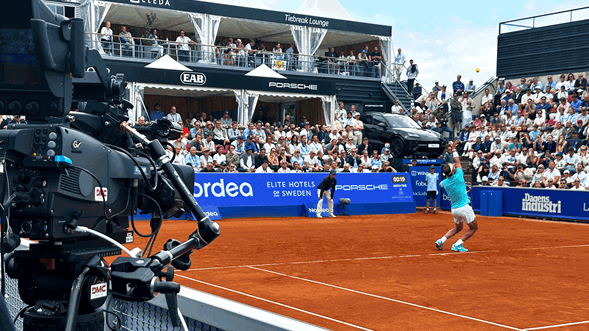
DMC used six Grass Valley LDX 98 cameras at the Nordea Open tennis tournament last year.
Grass Valley: All LDX 100 series cameras feature CMOS imagers with a global shutter and native UHD resolution. For lower-resolution formats or high-speed operation, the camera head includes an integrated downconversion process to ensure optimal output, with oversampling in the imagers enhancing modulation depth and delivering superior image quality. Native UHD operation is available as a standard feature or as an option, depending on the model. Even when operating in native UHD and HDR, the cameras can simultaneously produce high-quality 1080i and/or 1080p signals, with selectable 3D LUT conversion from HDR to SDR.
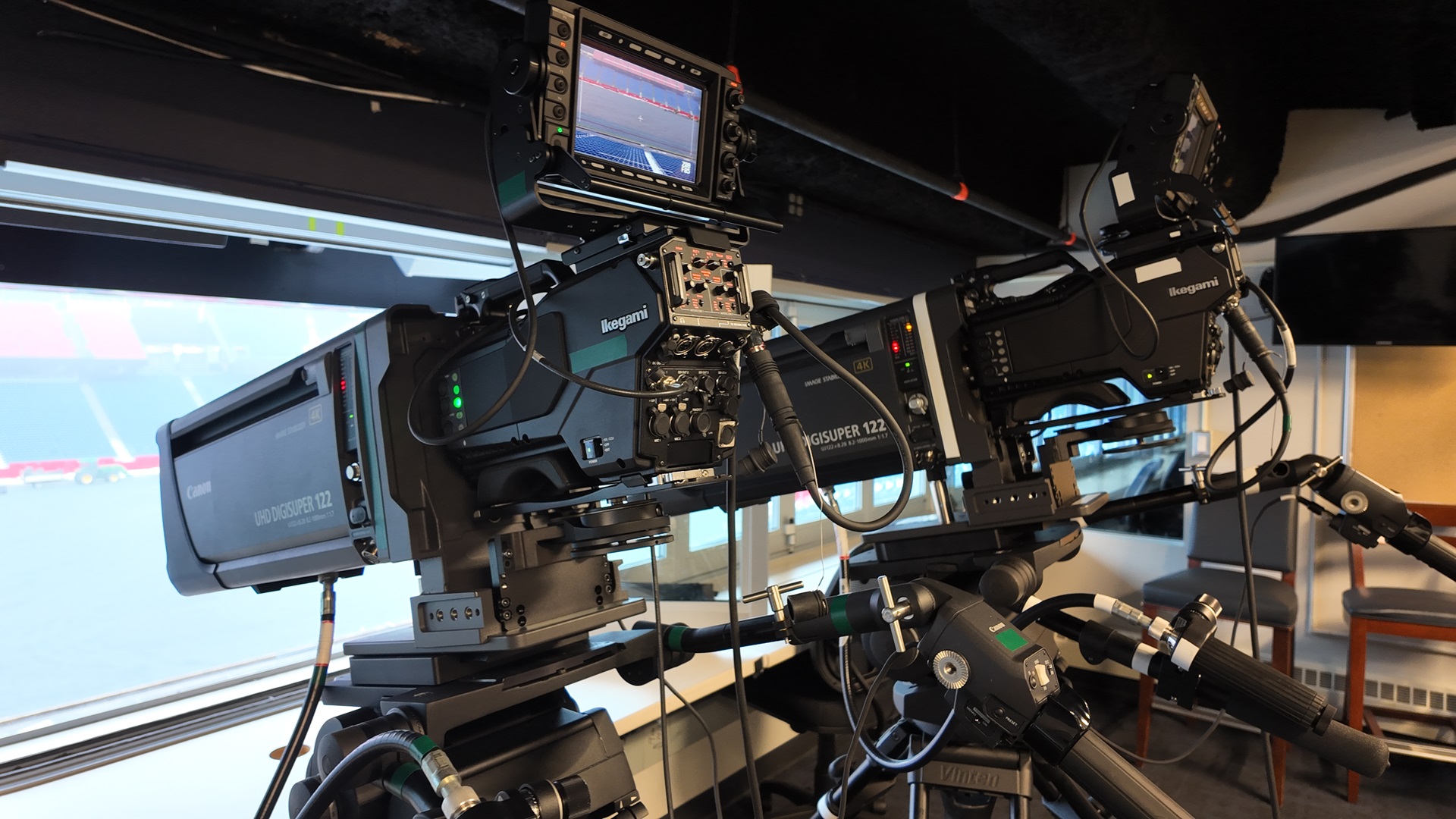
Ikegami UHK-X700s shooting format comparison at Gillette Stadium in Foxborough, MA
Ikegami: Ikegami offers portable, hard, and box cameras offering both UHD and HD, including models where 2160p UHD can be licensed later. These top-end models include UHD sensors, processing, and transmission. In single-path HD applications, the down-sampling from UHD to HD is executed after the sensors and prior to the processing. In dual-path UHD/HD applications, the UHD path is maintained throughout with downconversion to HD taking place in the CCU/base station for the secondary outputs.
In the case of HD-only cameras, Ikegami offers upconversion to 2160p UHD as a license for the CCU/base station.

KOKUSAI DENKI Electric SK-UHD7000 UHD production camera with SA1100 heavy-duty, large box lens adapter and system expansion unit for studio and field production, supporting dual 4K and HD workflows.
KOKUSAI DENKI: We use the same native 4K sensors in all cameras we produce today. Standardizing on one prism and sensor allows us to keep the cost manageable, and we can pass the discounts on to the customers. This also allows us to take advantage of BT.2020 even on our standard 1080p cameras. Offering sensors with the best in resolution will inevitably offer a more pristine picture when converting to 1080p/i or even 720p.
RED Digital Cinema: RED is obviously widely recognized as a leader in high-resolution cinematic cameras, with a strong focus on 8K and 6K imaging. Our cameras are designed to offer exceptional flexibility, and we provide both UHD and FHD formats at no additional charge or licensing fees.
Although 8K resolution may not be essential for traditional broadcast formats, we’re seeing a growing trend where 8K is used as a “canvas” in sports and live events. In these cases, we can capture in 8K and then select specific regions of interest from the larger frame to deliver UHD or FHD feeds. This provides broadcasters with more flexibility, allowing them to crop and zoom in postproduction without losing image quality, all while maintaining the high-resolution capabilities of the original 8K capture.

RED V-RAPTOR and the Fujinon 25-1000 pitch-side at a La Liga match last year
In terms of technology, our cameras are built to handle these multiple formats seamlessly. The native resolution of our sensors is 8K, but the cameras are designed to offer both UHD and FHD outputs without requiring separate licensing or additional hardware. This means that customers can easily switch between formats based on their production needs without worrying about hidden fees or complicated workflows.
Moreover, high resolution doesn’t come at the cost of speed. Our cameras are capable of capturing 8K at an impressive 120 fps, ensuring that even the fastest action is recorded in stunning detail. This makes our cameras ideal for fast-paced sports productions, where you can be sure you’ll never miss the shot, regardless of how fast the action unfolds.
Evaluating Sony’s 8K camera for future applications
Sony: As a leading CMOS-sensor manufacturer, we can build to super-high resolutions. Our 8K cameras use 1-in. CMOS sensors of 7,680×4,320 pixels — roughly 33 million pixels per imager for a total of about 100 million total pixels for RBG. In the ’90s, the original HDC-300 high-definition camera had 1-in. 1920×1080 CCDs, or just over 2 million pixels, per chip for a total 6.6 million. That system was about $800K each plus lens (in 1990 dollars). Today, the 8K system is about a third of that in 2024 dollars. In summary, 4K resolution for a camera is now the norm for the camcorders, PTZ, box, drone, and others readily available. 8K storage at 120 fps is equivalent to 16 channels of UHD. However, 8K will find applications as did 4K, or the 8K camera will become cost-effective enough — someday — to be the root of all other signals.
Cameras will always be first to move to a higher resolution, allowing current resolutions to be output while the rest of the infrastructure to support it either is deemed not cost-effective or is manufactured soon after.
Give us an example of why a customer made the format decision they did and why they selected your technology.
Blackmagic Design: Montréal production company Obvious C uses Blackmagic Design cameras for various sports productions, including numerous ski and snowboard World Cups. Obvious C producer/founder Alexandre Casabon explained that, for these events, the team used a combination of Blackmagic URSA Mini Pro 4.6K G2 cameras and Blackmagic Micro Studio Camera G2s, shooting in 1080p59.94 in the “video” setting. In the future, they plan to use the “extended video” HDR setting and have also tested incorporating DaVinci Resolve Studio to create a custom LUT with the camera in the “film” setting as they feel that could give them the best image to start with. The team chose Blackmagic Design cameras because their goal was to achieve a cinematic look with a shallow depth of field, enabled by the cameras’ image sensors. Casabon also noted that the cameras’ versatility, menu UI, price, and seamless integration with other broadcast equipment and DaVinci Resolve Studio make Blackmagic Design cameras the best choice for their workflow.
Grass Valley: Nearly all our customers who have recently purchased new OB vans are equipped for productions in native UHD resolution. Even those currently producing mainly or exclusively in 1080p want to be ready for potential future demands for UHD. We’re also seeing regional variations, with UHD productions more widespread in EMEA compared with North America, for example.
Ikegami: Gillette Stadium installed a new in-house IP system for their scoreboard and other video operations just prior to last season. They chose Ikegami cameras based on their experience with our cameras, as well as the performance at the camera demonstration. They are operating in 1080p. We supported a test in 2160p, with the customer deciding to use 1080p for now; they judged that the picture difference did not justify the cost for the licenses for our cameras and other products. It would not be surprising if this format decision, as well as HDR versus SDR, was reviewed sometime in the future with the cameras readily adaptable.
RED Digital Cinema: MediaPro have used RED V-RAPTOR and, more recently, V-RAPTOR [X] to capture the El Classico event between Barcelona and Real Madrid. They have been very excited about capturing amazing cinematic imagery at the matches and bringing those images to fans around the globe.
Meanwhile, COSM are also using V-RAPTOR cameras and our RED Connect technology to capture exciting sporting events across the globe to be showcased at their iconic immersive experiences in Los Angeles and Dallas.
This roundtable has been edited for length and clarity.