SVG Campus Shot Callers: Imry Halevi, Senior Associate Director of Athletics, Content & Strategic Communications, Harvard University
Supporting a whopping 42 sports, the longtime Bostonian innovates broadcast in exciting ways
Story Highlights
The pool of production and operations talent in sports media runs much deeper than the national networks. SVG Campus Shot Callers spotlights the behind-the-scenes leaders powering the massive wave of college sports productions available to fans today. Across athletic departments nationwide, these administrators manage teams, oversee technology investment, mentor students, and ensure that hundreds of live broadcasts make it to air each year. This series highlights their journeys, philosophies, and the vital role they play in shaping live sports.
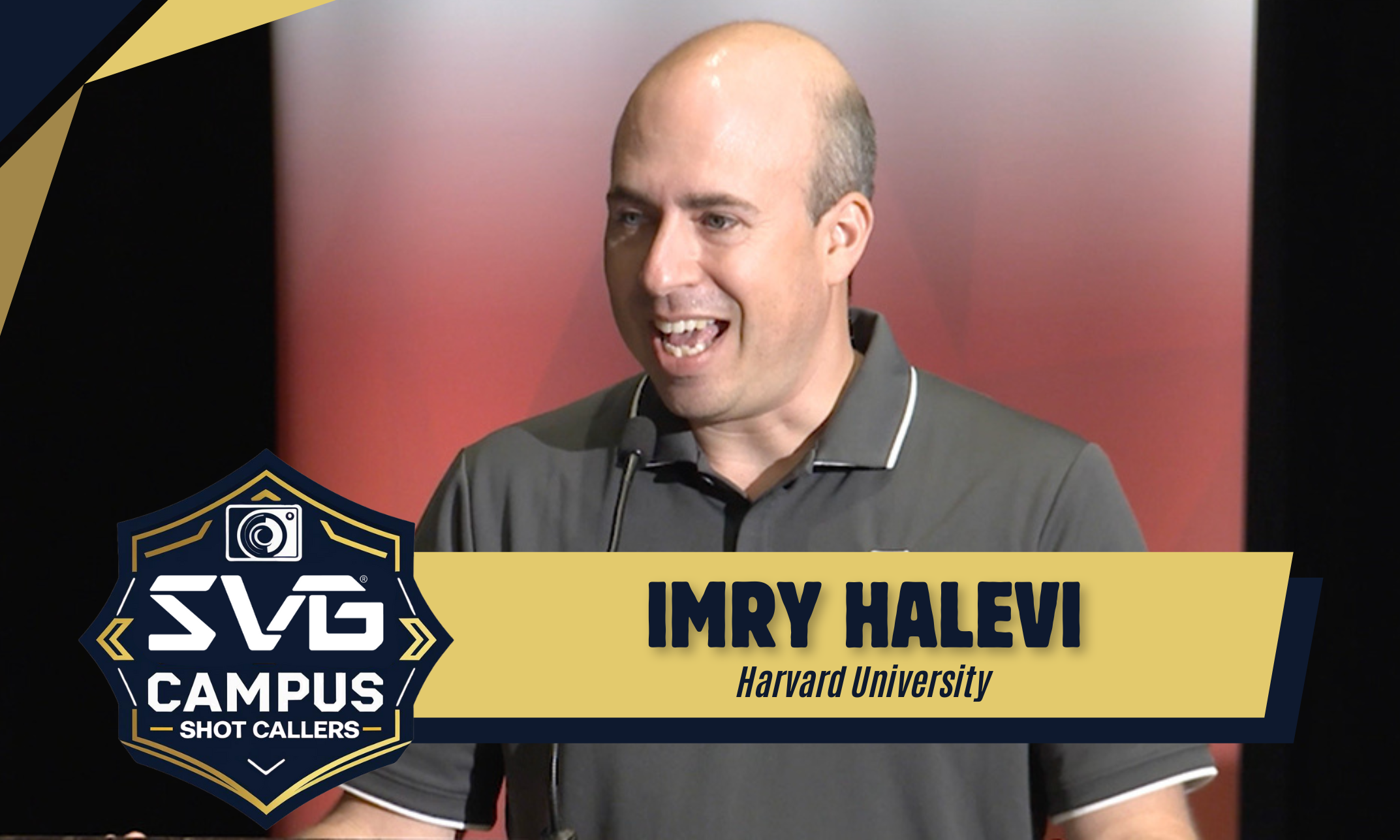
Few athletic departments in the country manage a content footprint as large or as varied as Harvard University’s. With more than 315 ESPN+ broadcasts each year, multiple linear shows on NESN, videoboard productions in five venues, and a nonstop flow of digital storytelling across social, web, and archival platforms, Harvard Athletics operates more like a full-scale media company than a traditional communications department.
The group responsible for orchestrating that ecosystem is Harvard’s Content & Strategic Communications unit, which merges multimedia, communications, and branding to preserve history and tell the stories of 42 (yes, 42!) varsity programs. Leading that effort is Imry Halevi, senior associate director of athletics, Content & Strategic Communications, now in his 13th year at Harvard and his third decade working in Boston-area collegiate sports.
Rising from director roles at Boston University and Northeastern to his current senior-leadership position in Cambridge, Halevi oversees the department’s entire external content operation: web, social media, photography, creative video, live stats, historical preservation, and hundreds of annual broadcasts on ESPN platforms. Under his guidance, Harvard has become a pioneer in centralized–control-room design, IP-based production workflows, and student-driven broadcasting, enabling the Crimson to stream everything from hockey at TD Garden to rowing, skiing, and sailing events captured hundreds of miles from campus.
In this edition of SVG Campus Shot Callers, Halevi reflects on his leadership philosophy, the department’s transformation into an IP-first broadcast operation, his accidental path into sports production, and why giving his staff permission to fail has become central to innovation at Harvard.
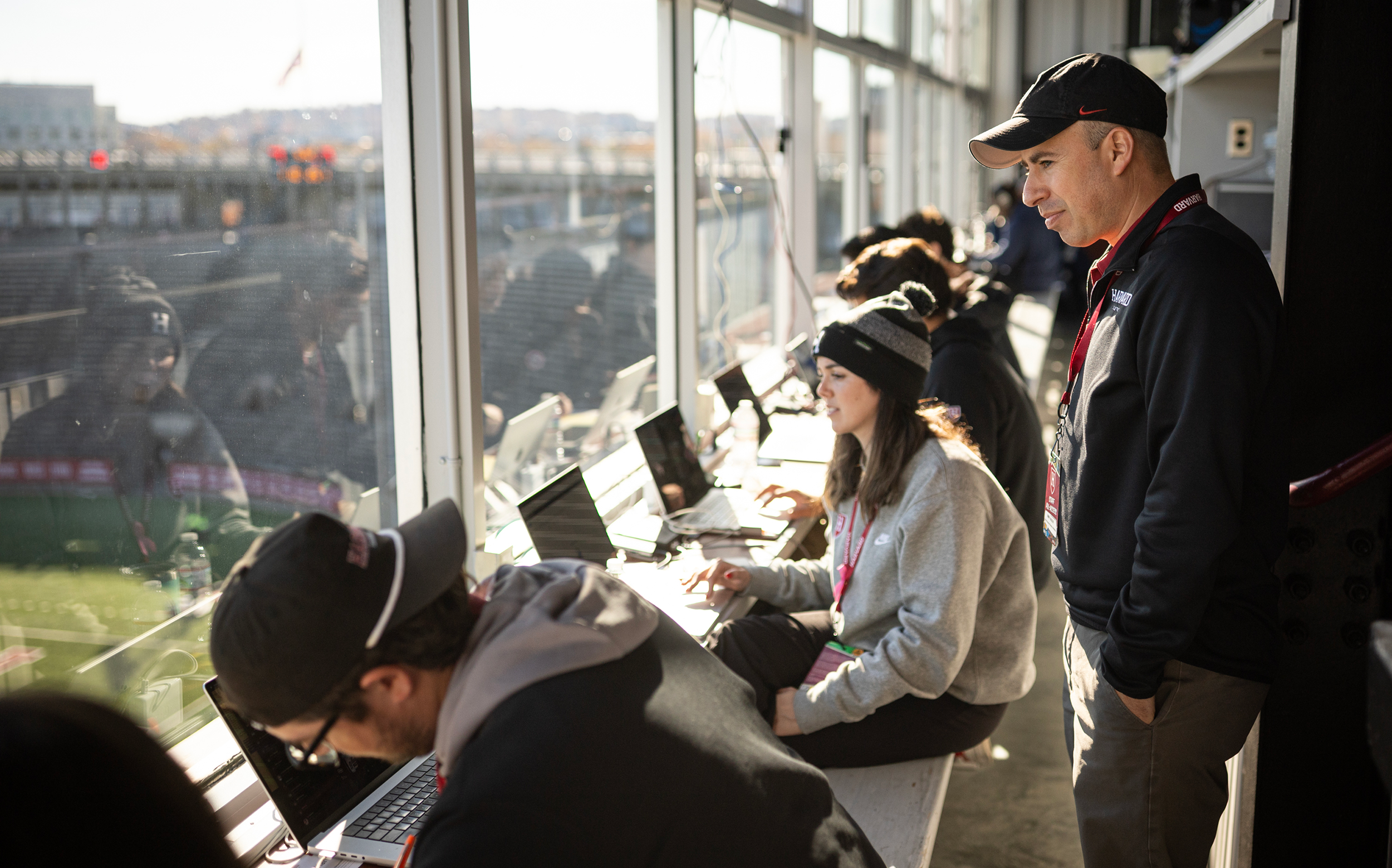
Halevi oversees media staff during a Harvard Football game this season. (Photos: Harvard Athletics)
What are the key responsibilities of your current role?
My current role is all about leadership. I no longer push switcher buttons, write stories, or take photos. I’m here to run interference for my team; to make sure that they have the tools, resources, and guidance to get their job done; and to make sure that I clear the road in front of them so that nothing gets in their way.
Our mission is to “preserve our history and to tell the stories of our student athletes, coaches, and teams.” That means that my role is to help my team connect all projects and content back to that mission.
My goals are to advocate, delegate, motivate, integrate, innovate, and celebrate. I want to have a well-integrated communications and multimedia team that is well-motivated, feels agency over their actions and decisions, and knows that I will always advocate on their behalf while celebrating their accomplishments.
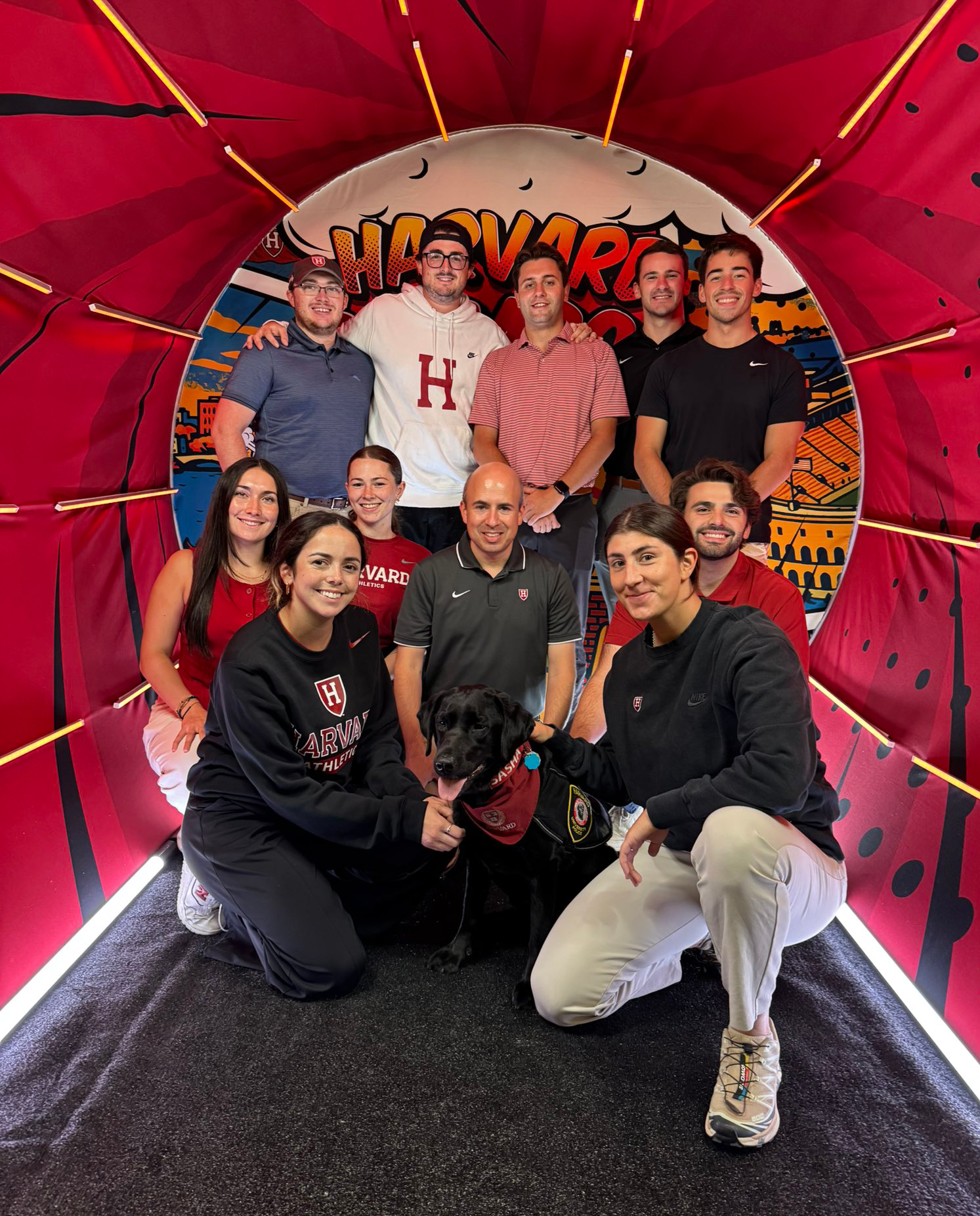
Halevi’s department on its Media Day set prior to the start of the 2025-26 academic year. Top row: (from left) Dillon Wall, Phil Tor, Matt Klinkenberg, Joe Franklin, Eddie Monigan. Bottom row: (from left) Natalie Descalso, Maggie Menoni, Lily Grazioso, Halevi, Olivia Cooke, Ford Leary
What is one core philosophy you try to live by when managing your team/operation?
We’re not doctors. The risk, if we fail, is very low. So, let’s fail. I give my team permission to fail. Try something and learn from it. It went well? Great! Let’s do it again. It didn’t go well? Great! We learned something, and now we know what not to do.
What is one key technology investment that your department has made that you feel has greatly improved your productions, workflows, or how your team operates?
Our move to IP has been, by far, our biggest transformation when it comes to broadcast engineering. We now use Dante for audio, NDI for local video, and LiveU bonded cellular for remote audio/video almost exclusively. That has meant that we can centralize all our productions in our control rooms for minimal investment. We no longer move equipment around from place to place. We no longer have to take gear weight and size into consideration. We built the best two control rooms that fit our needs, and we get all our production feeds into them.
That also means that we’ve been able to do some cool things: skiing productions from Vermont and New Hampshire, rowing from New Jersey, sailing productions from the Charles River, baseball from Fenway Park, and ice hockey from the TD Garden. All from within our control rooms. Location is no longer a big factor for us.
How did you get started in sports production? What made you want to pursue this career?
Like many people, I got into sports productions by accident. I had a part-time student job at Agganis Arena, the ice hockey, basketball, and event arena at my college. I mostly worked on graphic design and some very basic video editing. But then someone got sick, and I was asked to step in and help out with some in-venue Daktronics content control (play some of the in-venue video-ribbon content). That lead to work on the videoboard-production team.
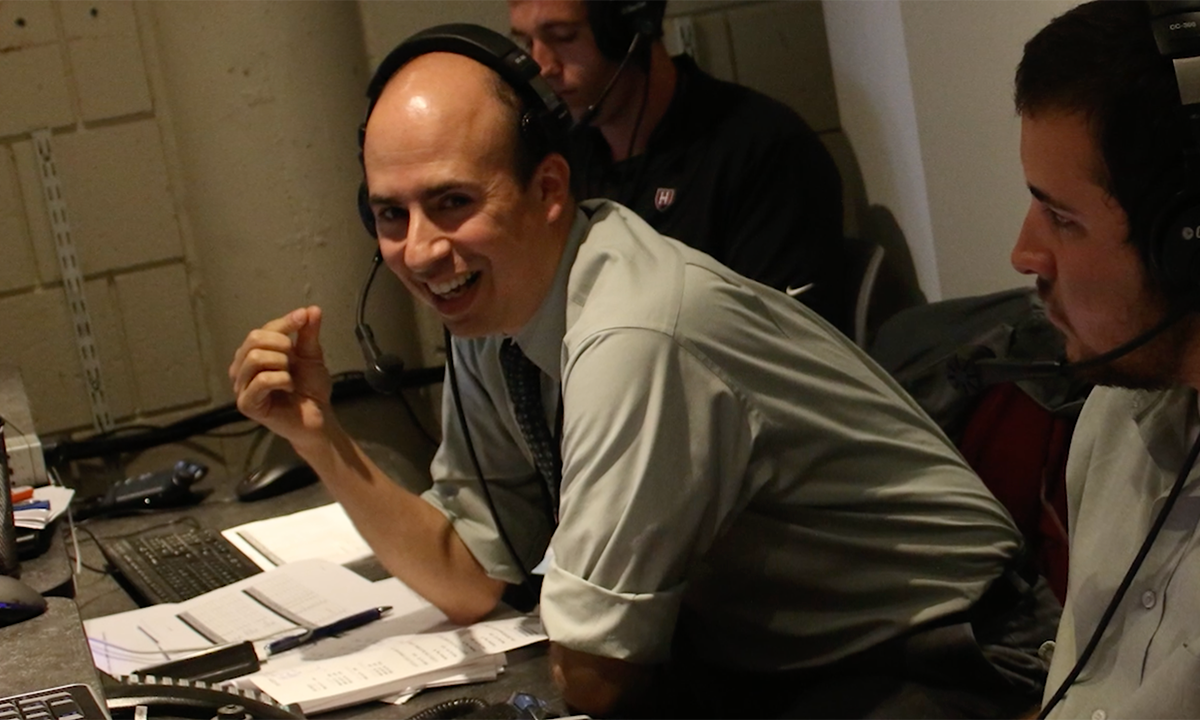
Halevi has been a fixture of the Harvard athletic department since 2012. Here, he directs a broadcast from the athletic department’s control room in 2015.
When I got out of college, this just made sense for me as a career. It was fast-paced, it was exciting, it involved both technology and creativity, and it allowed me to stay close to the college-athletics world, which I enjoyed. Throughout the way, I’ve also been very lucky to have great bosses who let me learn on the job. I didn’t know anything about streaming or how to produce for TV or about broadcast engineering. But I asked a lot of questions, made many mistakes, and just figured it out along the way.
What is your favorite event(s) you’ve ever worked?
Our first-ever ski broadcast in 2020. It started as just an idea. Our ski coach stopped by my office and said, “Wouldn’t it be cool if we could stream this.” That lead to months of planning, trying, failing, trying again, testing, traveling, transmitting, and then completely changing the entire plan when the venue changed at the last minute due to weather conditions. Still, it got on the air, was something that we had never done before, and allowed us to tell the story of student-athletes who don’t typically get a chance to appear on ESPN+ or have their parents be able to watch them live.
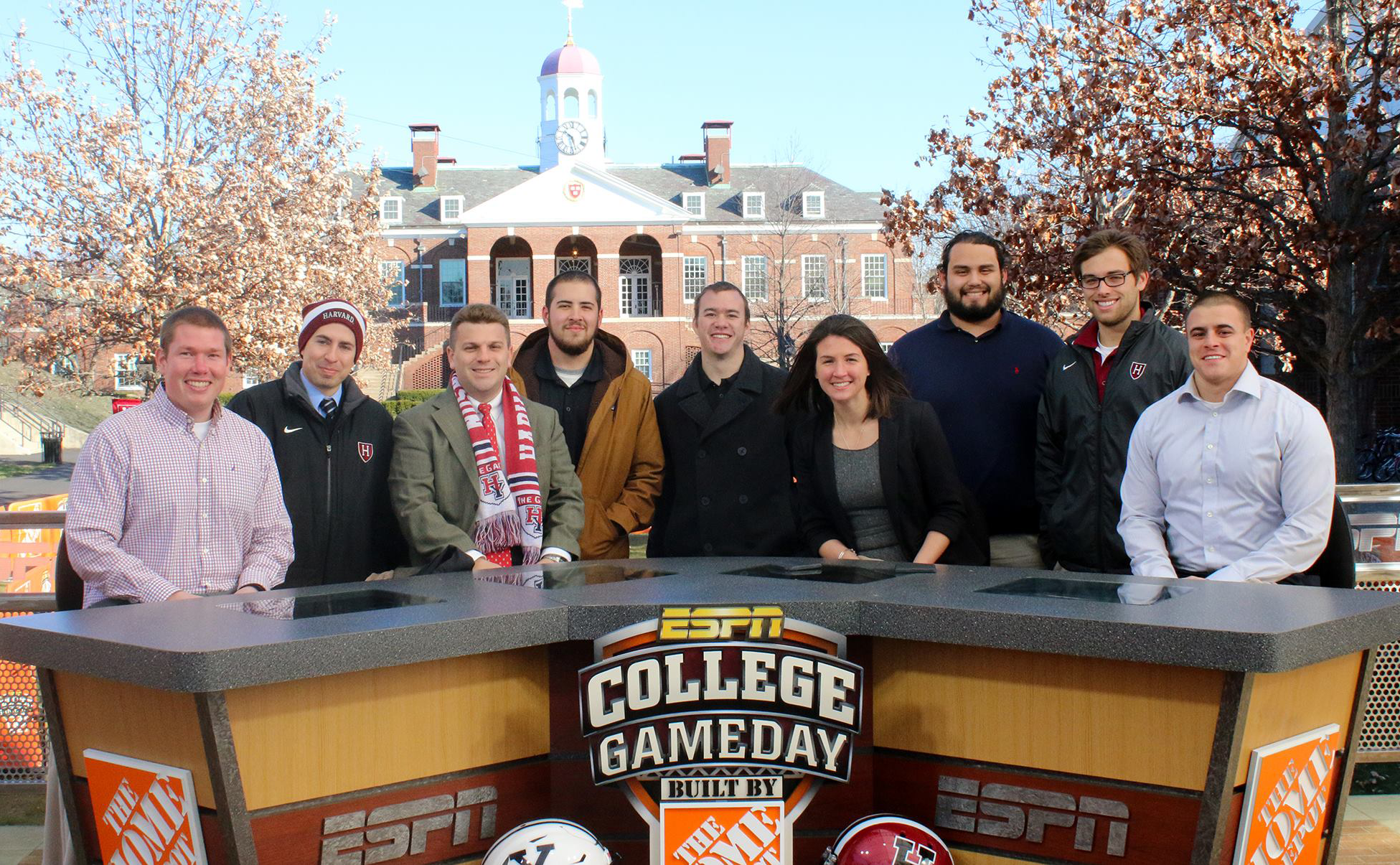
In 2015, ESPN’s College GameDay visited the Harvard campus: (from left) Andy Chesebro, Halevi, Tim Williamson, Jake Dauzat, Zach Reynolds, Alli Fossner, Achilles Carmenate, Ryan Christiansen, Brock Malone.
What’s one piece of advice that you regularly give your student workers?
Doing something is better than doing nothing. You’re on camera and not sure what to show? Don’t sit on a wide shot. Find something. Anything! Listen to the program feed, follow what the commentators are saying, and then sell it. Try to make the director take your shot by always showing something relevant and well-framed. Running replay? Build packages! Find cool angles! And then, again, sell it! Tell the director what you have. Don’t wait to be told. Don’t wait for guidance. Be part of the solution. Be part of the story.
If you would like to nominate someone in collegiate athletics administration to be featured in SVG Campus Shot Callers, please email SVG Director of Digital Brandon Costa at brandon@sportsvideo.org.