Sports Broadcasting Hall of Fame Inducts 10 Industry Icons During Unforgettable Night
The Class of 2025: Glenn Adamo, Lee Corso, Curt Gowdy Jr., Greg Gumbel, Marc Herklotz, Jerry Jones, Hiroshi Kiriyama, David Levy, Pam Oliver, Bill Rasmussen
Story Highlights
The Sports Broadcasting Hall of Fame officially inducted its 18th class in a powerful and poignant ceremony Tuesday night at the New York Hilton Midtown Hotel. Ten industry legends from in front of and behind the camera were inducted in a ceremony hosted by former CBS Sports Chairman Sean McManus, a Sports Broadcasting Hall of Famer himself. All table sales from the event were once again donated to the Sports Broadcasting Fund, which supports industry members in times of need.
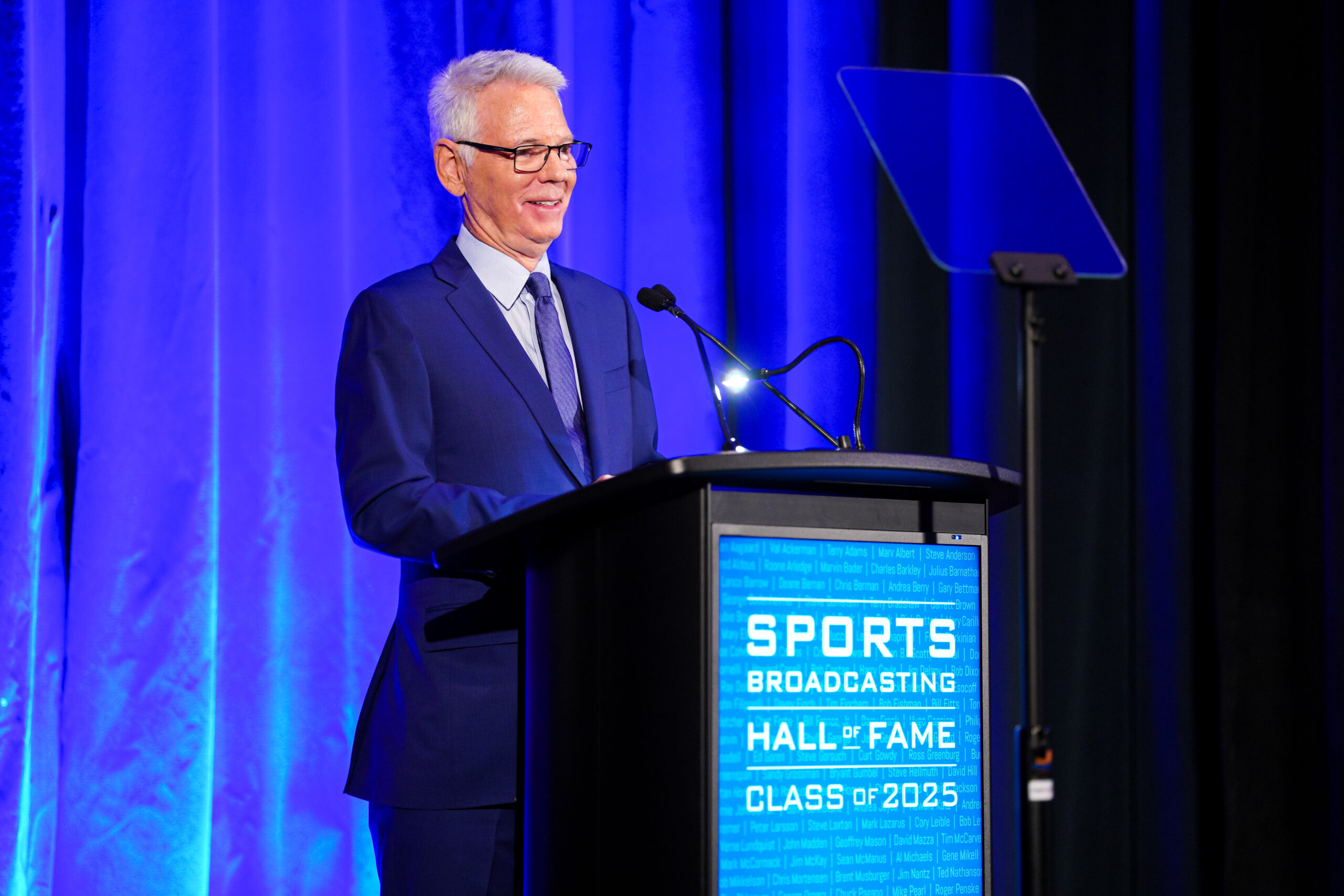
Sean McManus, Sports Broadcast Hall of Famer, hosted the evening.
This year’s inductees comprise 40-year sports-broadcasting vet Glenn Adamo, beloved ESPN college-football analyst Lee Corso, longtime ABC producer and SNY production pioneer Curt Gowdy Jr., iconic studio and play-by-play announcer Greg Gumbel, industry-leading technical director Marc Herklotz, Dallas Cowboys owner Jerry Jones, longtime Sony Professional CTO Hiroshi Kiriyama, former Turner Broadcasting President and current HS&E CEO David Levy, FOX Sports Senior Correspondent and trailblazing NFL reporter Pam Oliver, and ESPN founder and visionary Bill Rasmussen.
CLICK HERE TO WATCH THE FULL CEREMONY
Glenn Adamo, Artist of Storytelling and Technology
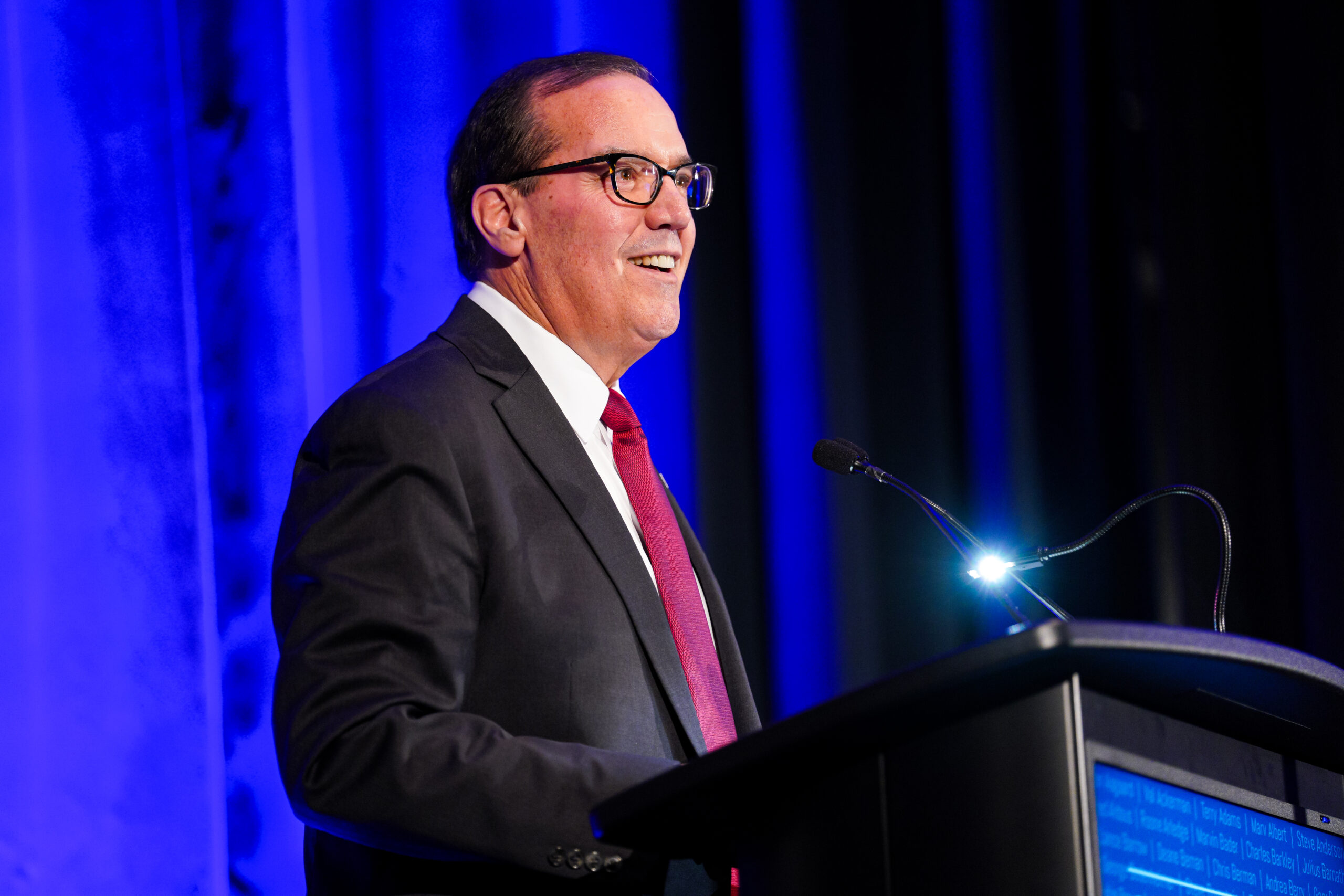
Glenn Adamo
Glenn Adamo may have begun his career in sports on the ice as an aspiring hockey player, but his impact on the industry has been in the production truck and the front office. Whether at NBC Sports, the NHL, the NFL, the New Jersey Devils, or The Switch, he proved adept and creative when it came to storytelling, operations, and technology. Adamo’s approach to deploying new technology during his 40-year career — whether getting cameras in the goal or red lights in the penalty box to denote TV timeouts — was to make sure it made sense for the production team, the viewer at home, and even the athletes.
His expertise has been pivotal in major broadcasts, including four Olympic Games, 13 Super Bowls, 12 years of Wimbledon and the French Open, premier College Bowl Games, NBA, NHL, golf, NCAA Basketball and Football, boxing, NBC SportsWorld, and PBA bowling. After establishing his career at NBC Sports, Adamo was a group VP of the NHL Broadcasting Department, where he established NHL Productions and pioneered various programming and on-ice camera technology. He also was VP of broadcasting, community development, and entertainment for the Stanley Cup Champion NJ Devils and then VP at the NFL (2003-16), where he spearheaded the launch of NFL Network, Thursday Night Football, and NFL Sunday Ticket Red Zone and drove development of NFL Replay, Next Gen Stats, and NFL OTT production. Today, he is managing director of The Switch Production Services, the creative and distribution arm of The Switch/Tata Media Production Group.
Lee Corso, Coach, Commentator, Firebrand
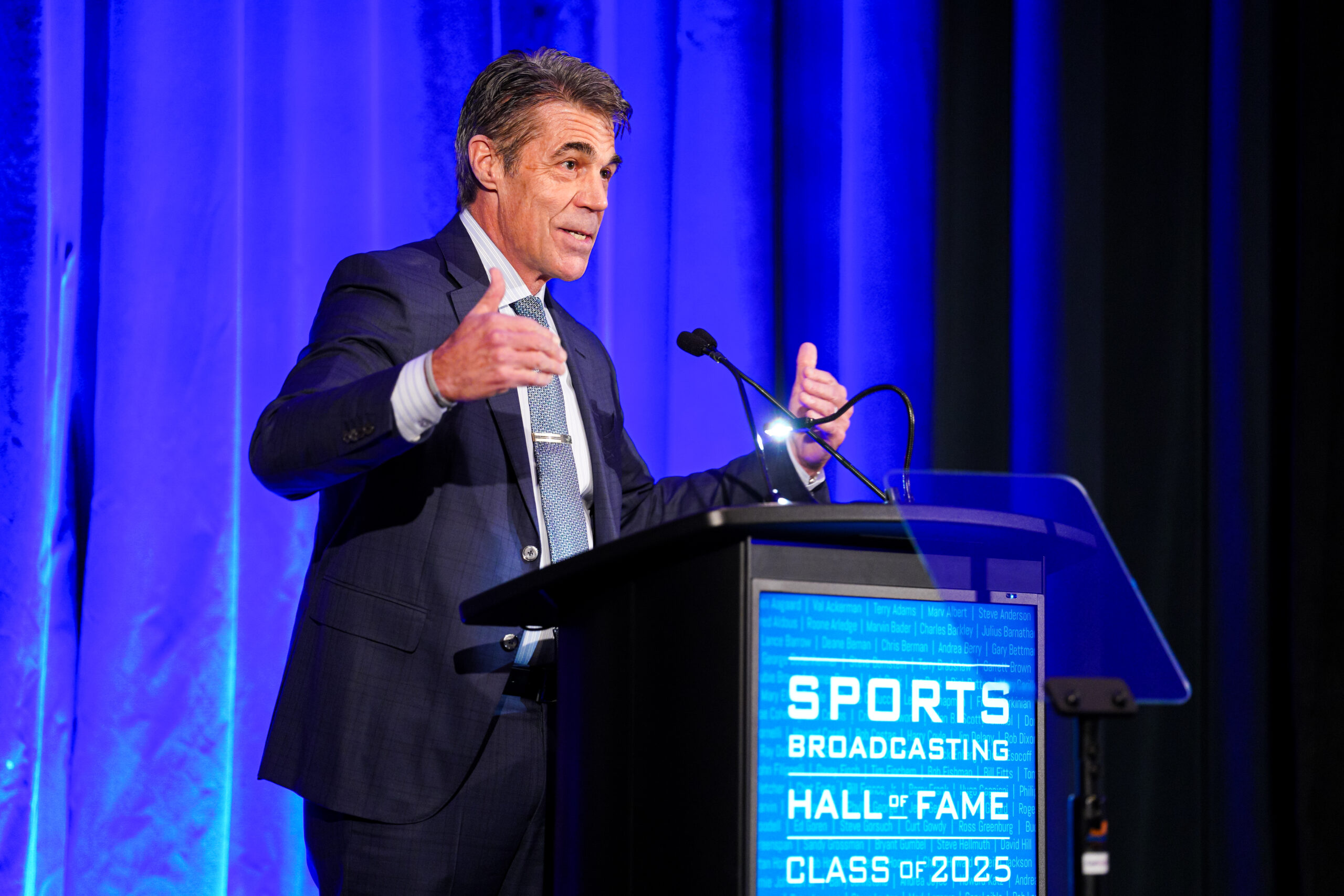
ESPN’s Chris Fowler accepts Corso’s award on his behalf.
Sometimes a Hall of Fame career is born out of a passion and drive for excellence, but, every once in a while, it has much humbler origins. Such is the case with Lee Corso, who, from 1987 to last August, was a key reason that ESPN’s College GameDay is required viewing for any serious (and many non-serious) college-football fans.
Corso is one of college football’s signature voices and a member of ESPN’s nine-time Emmy Award–winning College GameDay Built by The Home Depot Saturday-morning pregame show. He retired this year after spending nearly four decades as one of the few bigger-than-life broadcast personalities who was seen as an authentic and fun on-air commentator. He has been a constant in ESPN’s coverage, including countless national championships and other major college football events. Corso joined ESPN in 1987 and was one of the original members of College GameDay’s on-air team (first as a contributor in 1987-88 before joining as a full-time analyst in 1989). Corso’s award was accepted by his longtime CBS sports time ESPN College GameDay co-host Chris Fowler.
Curt Gowdy Jr., Master Storyteller, Nationally and Regionally
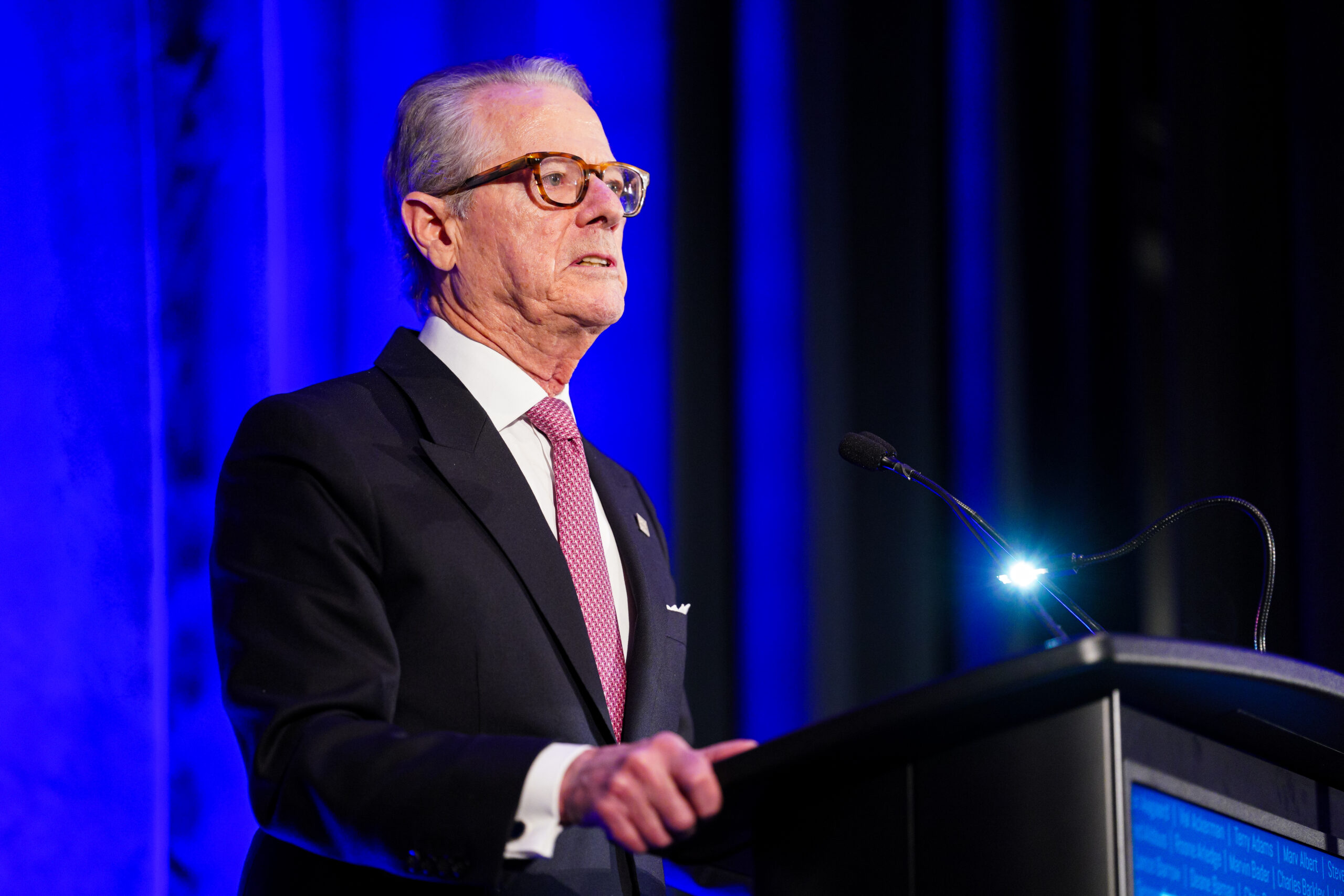
Curt Gowdy Jr.
Curt Gowdy Jr. may have been born into sports-broadcasting royalty, but he blazed his own trail, becoming one of the most respected and influential production leaders the business has ever seen. From his 29 years producing broadcasts at ABC Sports to his integral role in launching SportsNet New York (SNY) in 2005, Gowdy has seen it all on both a national and a regional scale.
A winner of 16 National and 27 Regional Emmy Awards, Gowdy spent 29 years at ABC Sports, including a stint as senior coordinating producer for ABC’s Wide World of Sports and producer of three World Series, most notably the 1989 Bay Area “earthquake” Series. He also played key roles in producing coverage of four Olympic Games; 14 Kentucky Derby and 12 other Triple Crown races; numerous Super Bowl pre/postgame and halftime shows; 18 U.S. Figure Skating Championships and 11 World Figure Skating Championships; and 16 Little League World Series. In 2005, Gowdy shifted his focus to the launch of SNY, where he spent 17 years as senior vice president and executive producer, building an RSN that set a new industry standard. He retired in 2022.
Greg Gumbel, Iconic Voice and Comforting Presence
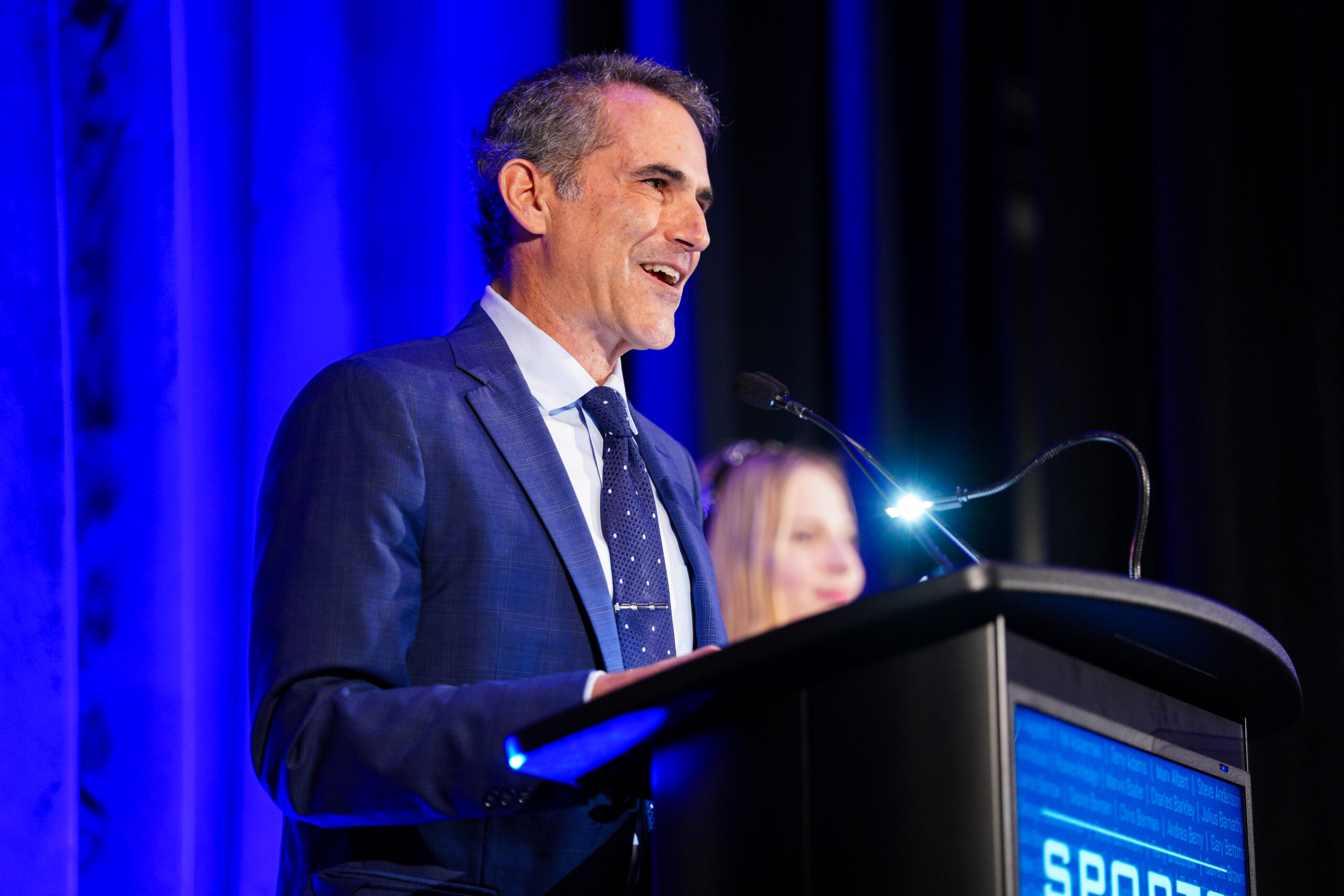
Seth Davis and Riley Gumbel, Greg’s granddaughter, accepting the award on behalf of Gumbel.
Greg Gumbel hit all the high notes during a five-decade career that included stops at ESPN, NBC, and CBS, hosting and calling marquee events and breaking barriers at each stop. Equally lasting and especially cherished in the wake of Gumbel’s death last year is the memory of his low-key affability that was as evident and genuine to co-workers as it was to viewers. Gumbel’s award was accepted by his longtime CBS sports college basketball on-air colleague Seth Davis.
Gumbel was one of the most respected personalities in the business, and he did it all. He was the first network broadcaster to call play-by-play and host a Super Bowl in the same year (twice); spent six years as lead play-by-play for CBS NFL coverage alongside Phil Simms; hosted The NFL Today and CBS Sports’ March Madness coverage; called NBA games for both CBS and NBC; served as primetime anchor of CBS coverage of the 1994 Olympic Games and co-anchor of weekday-morning broadcasts of the 1992 Games (in 1996, he hosted NBC’s daytime coverage); and for 24 consecutive seasons as studio host of CBS Sports’ coverage of the NCAA Men’s basketball championship. He was also the recipient of the 2007 Pat Summerall Award for excellence in sports broadcasting.
Seth Davis and Riley Gumbel, Greg’s granddaughter, accepting the award on behalf of Gumbel.
Marc Herklotz, Steady Hand Behind the Scenes
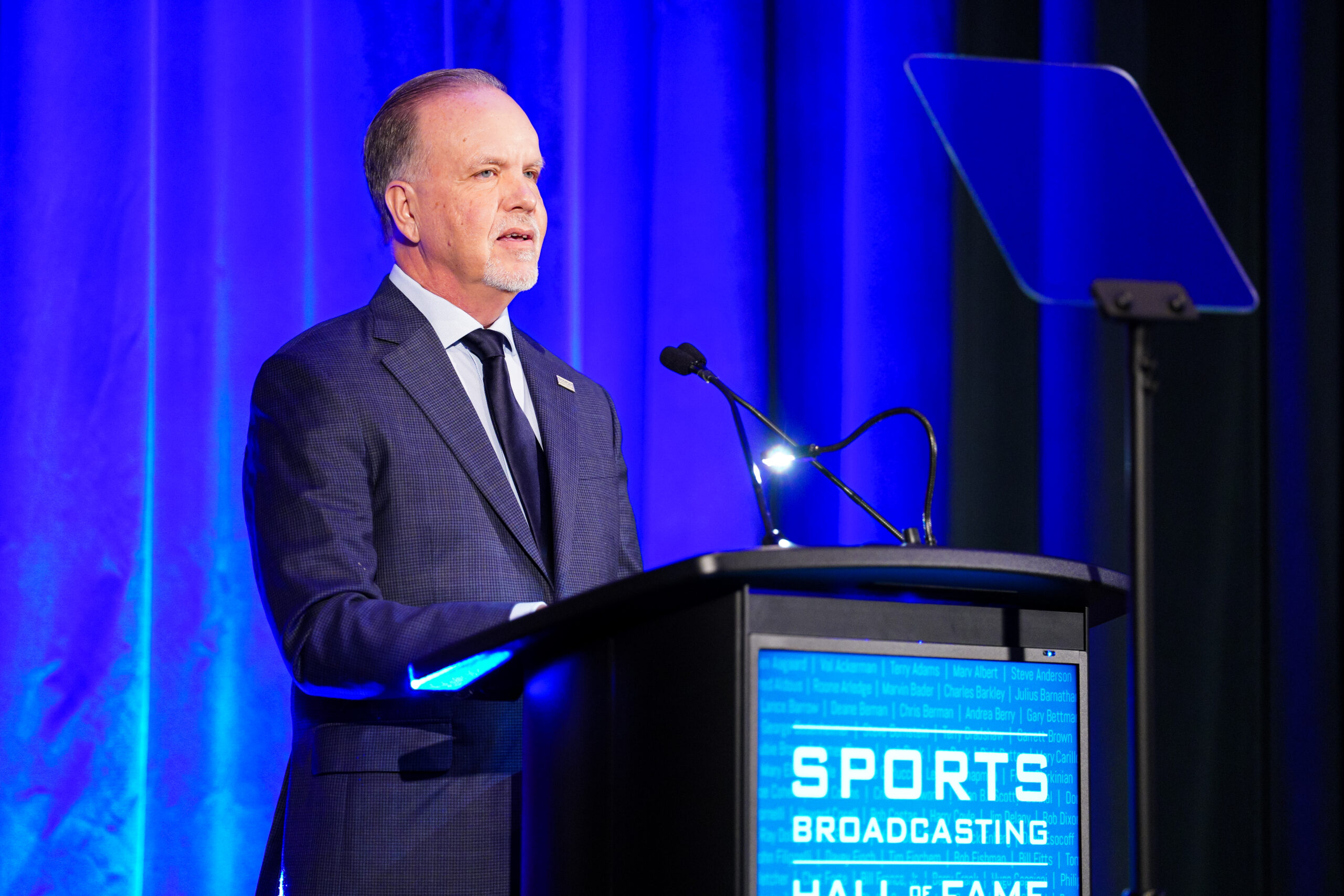
Marc Herklotz
When it comes to television production, a technical director is very much behind the scenes. Manning the production switcher in the production truck and turning the vision of the director and producer into reality, they ensure that tens of millions of fans tuning in feel like they are in the venue. For those who, like Marc Herklotz, take the role to new heights, it’s a mixture of not only technical chops but creativity and, ultimately, trust.
Herklotz was at the center of some of ESPN’s biggest moments for nearly 30 years, technical-directing Sunday Night Baseball (1994-2019), Sunday Night Football (1996-2005), Monday Night Football (2006-18), Home Run Derbies (1993-2019). And he was able to TD outside ESPN and at three Olympics (Barcelona 1992, Lillehammer 1994, and Atlanta 1996). He also pioneered key technical elements, such as the network-wide replay wipe in the mid ’90s, a feature that became a hallmark of ESPN’s broadcast style. He helped establish standards for delivering animation elements to technical directors in remote-production settings, shaping the execution of broadcasts across the network. A winner of four National Emmy Awards and a Regional Emmy, he participated in at least 2,000 events and set the foundation for many of ESPN’s technical advances during his tenure.
Jerry Jones, Visionary of Value
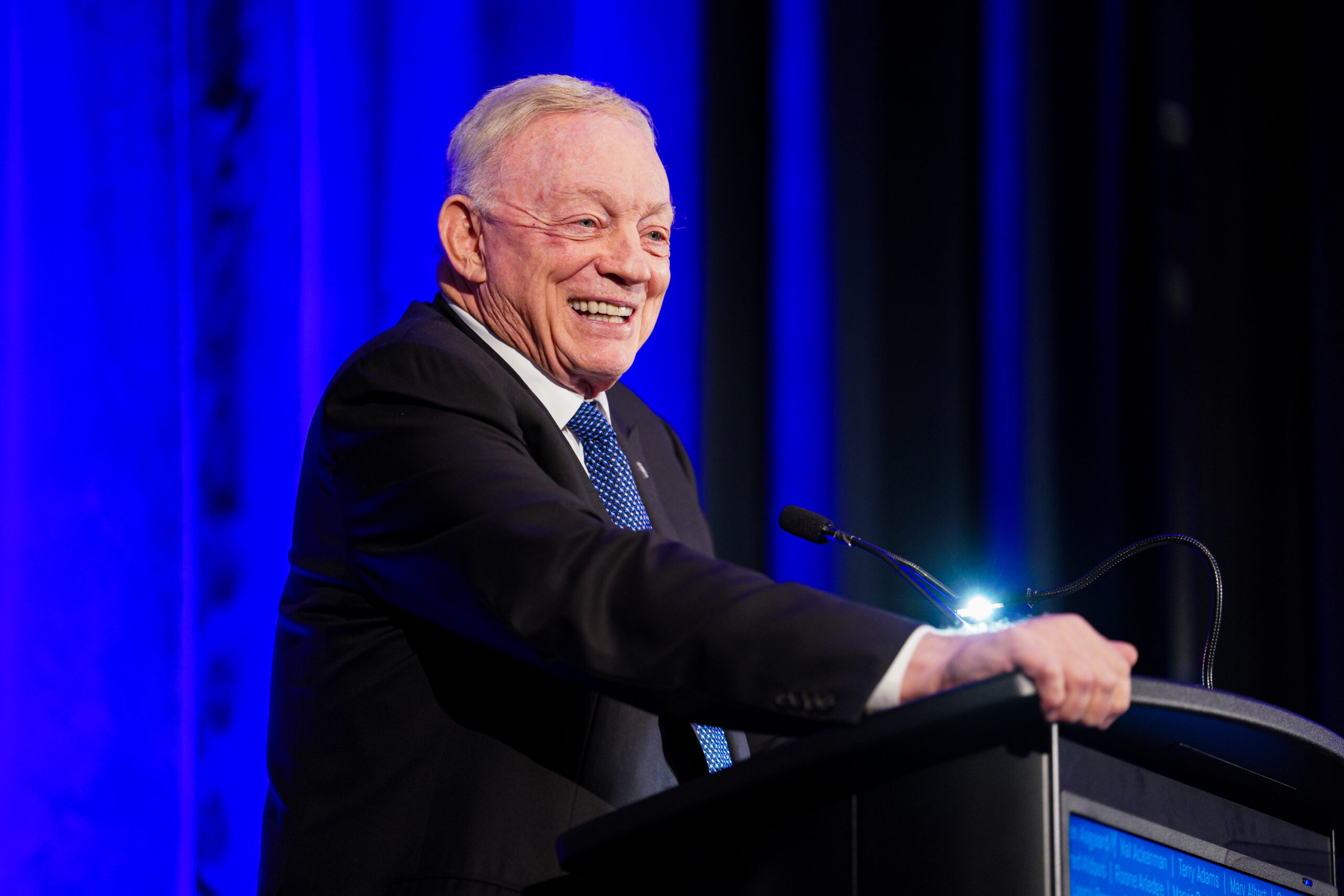
Jerry Jones
In the amazing world of Dallas Cowboys owner Jerry Jones, one plus one can equal three. It may sound like fuzzy math, but it’s a state of mind that has enabled Jones to increase the Cowboys’ value from $140 million when he bought the team in 1989 to an estimated $13 billion today — and to help turn the NFL into a TV powerhouse. Along the way, Jones helped enrich his fellow NFL owners, the league’s advertisers, and its players to a degree that would have been unimaginable 36 years ago. He’s the rising tide that has lifted all boats.
Beginning in 1992, then-Commissioner Paul Tagliabue invited Jones into the contract talks with the television networks, and Jones was involved with the talks that led to FOX’s outbidding CBS by more than $100 million a season, and the league’s television contract reached $1.1 billion. Without Jones, it is possible that the league, its relationship with TV networks, and the role it plays in the broader sports landscape would be very, very different.
On the league front, Jones actively contributes his vision and enthusiasm to enhancing the NFL’s status as the world’s premier professional-sports league by serving on a wide range of league committees. In his 34-year career, Jones has worked on 15 NFL ownership committees for a combined total of 136 years. He is currently chairman of the NFL Media O&O Committee, chairman of the Pro Football Hall of Fame Committee, and a member of the NFL Media Committee.
Hiroshi Kiriyama, Sony Broadcast (and Industry) Technology Icon
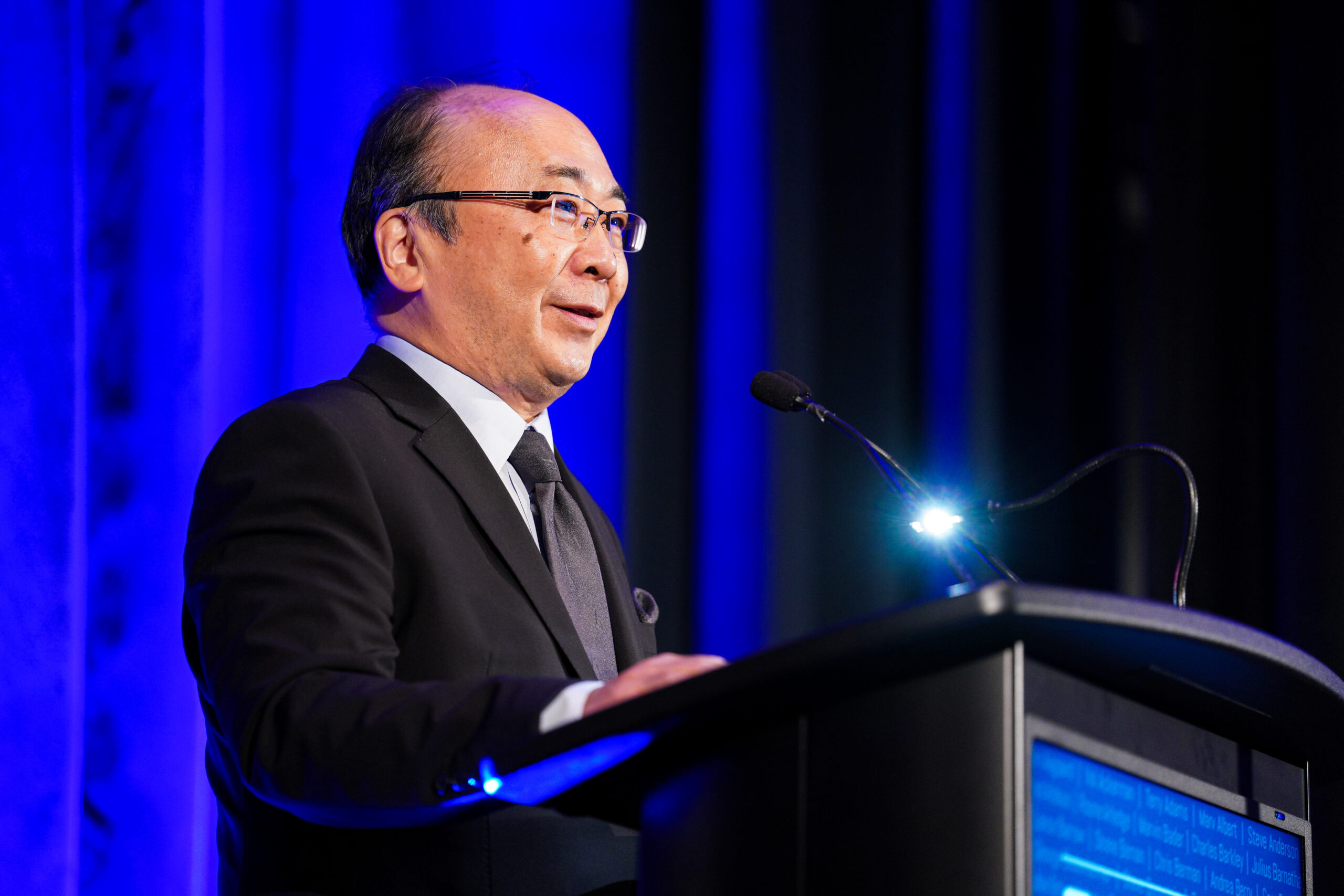
Hiroshi Kiriyama
If you ever relied on a Sony HDCAM-SR VTR or Sony camera with 4K 3-CCD sensors, or Venice, you have Hiroshi Kiriyama, the recently retired CTO of Sony’s Professional Division, to thank. He played lead engineering roles in their development.
Kiriyama joined Sony in 1982 and moved quickly from a mechanical engineer in the telecine division to Sony’s critical VTR segment. As lead engineer, he developed the industry standard HDCAM-SR VTR.
The success of that platform led Sony to promote him to lead the entire broadcast and production division of Sony Corp. It was there that Kiriyama showed the outstanding ability to listen to the customer. While many in the industry believed that it was not possible to develop a 4K 3-chip camera that could do slow motion, Kiriyama and his team did precisely that when they launched the HDC-4300, a 4K 3-chip camera that could do 8X super-slow-motion in HD.
Kiriyama’s management prowess and dreams for better resolution led Sony to develop the HDC-4800, which could do 4K at 8X super-slow-motion, and the UHC-8300, a 3-chip 8K camera. Perhaps his greatest achievement was development of the HDC-5000 and 3000 camera series that have now become the world leaders in 4K, 1080p, 1080p HDR, and 4K HDR production. Kiriyama was also lead advisor on development of the Sony Venice and Venice 2 cinema cameras.
Kiriyama’s influence did not stop with cameras: he was a force behind development of Sony’s micro-LED technology and “CLED.”
David Levy, Turner Titan and Master of All Sports-Media Trades
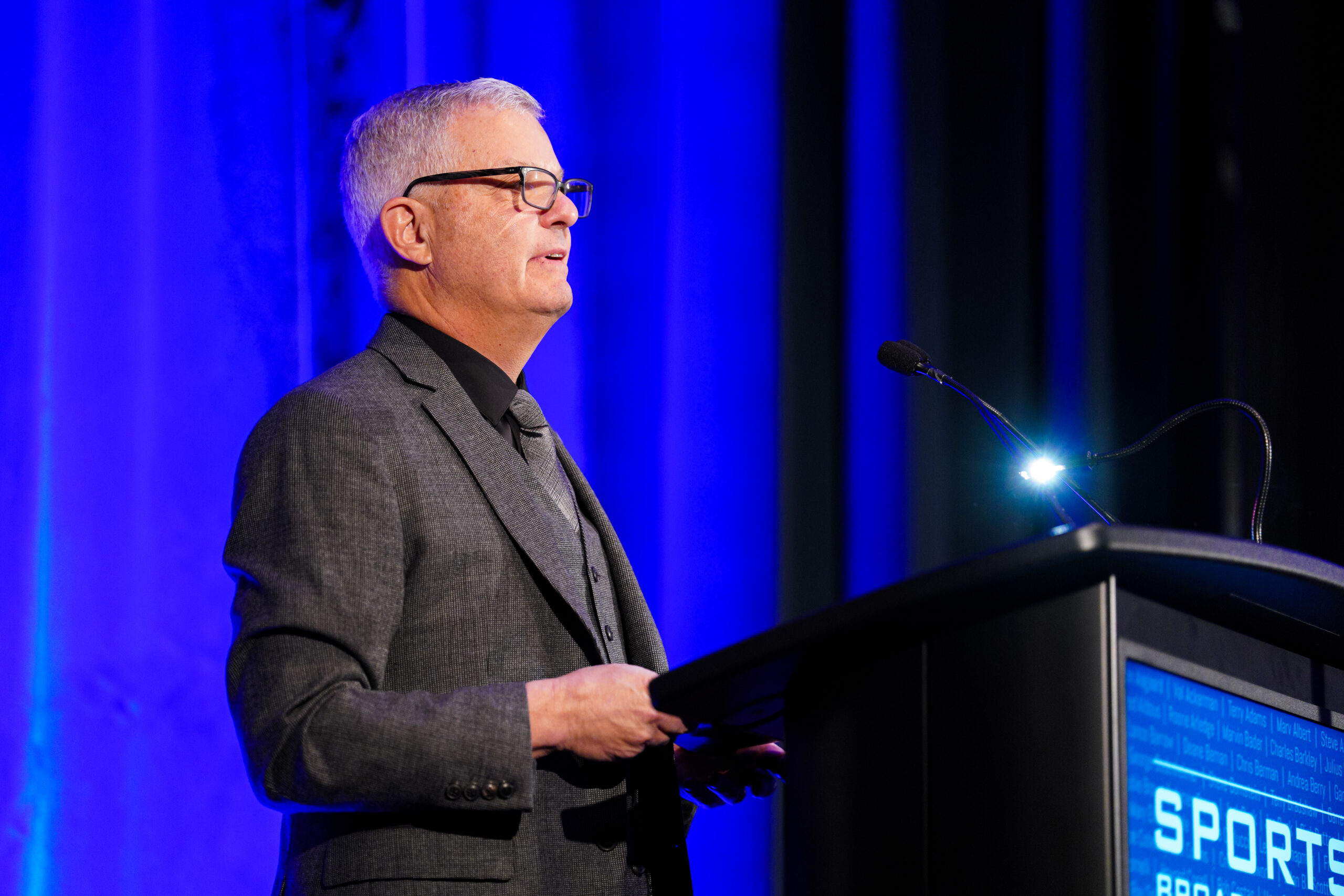
David Levy
Over a career spanning more than three decades, David Levy has cemented himself as one of sports media’s genuine jack-of-all-trades. During 33 years at Turner and throughout his travels since, he has earned a reputation not only as one of the top dealmakers in the business but also as a gifted leader in ad sales, programming, production, and marketing and in finding and cultivating elite on-air talent.
As president of Turner Broadcasting Inc., Levy oversaw the company’s wide portfolio of properties and operations, but sports has always been his true passion. After working his way up the ranks and taking over Turner Sports in 2003, he was instrumental in deepening and expanding the company’s media rights by negotiating a variety of groundbreaking multiplatform deals with the NBA, MLB, NCAA, PGA TOUR, and countless others. He negotiated a variety of multi-faceted agreements, each representing a significant change extending far beyond traditional television rights — most notably, orchestrating a landmark NCAA Division I Men’s Basketball deal in 2010 in partnership with CBS. After departing Turner, he co-founded in 2022 and currently serves as co-CEO of Horizon Sports & Experiences (HS&E), which focuses on IP creation and monetization, strategic advisory and consulting on media rights, sponsorships, sales, and experiential.
Pam Oliver, Sideline Icon Who Redefined the Role
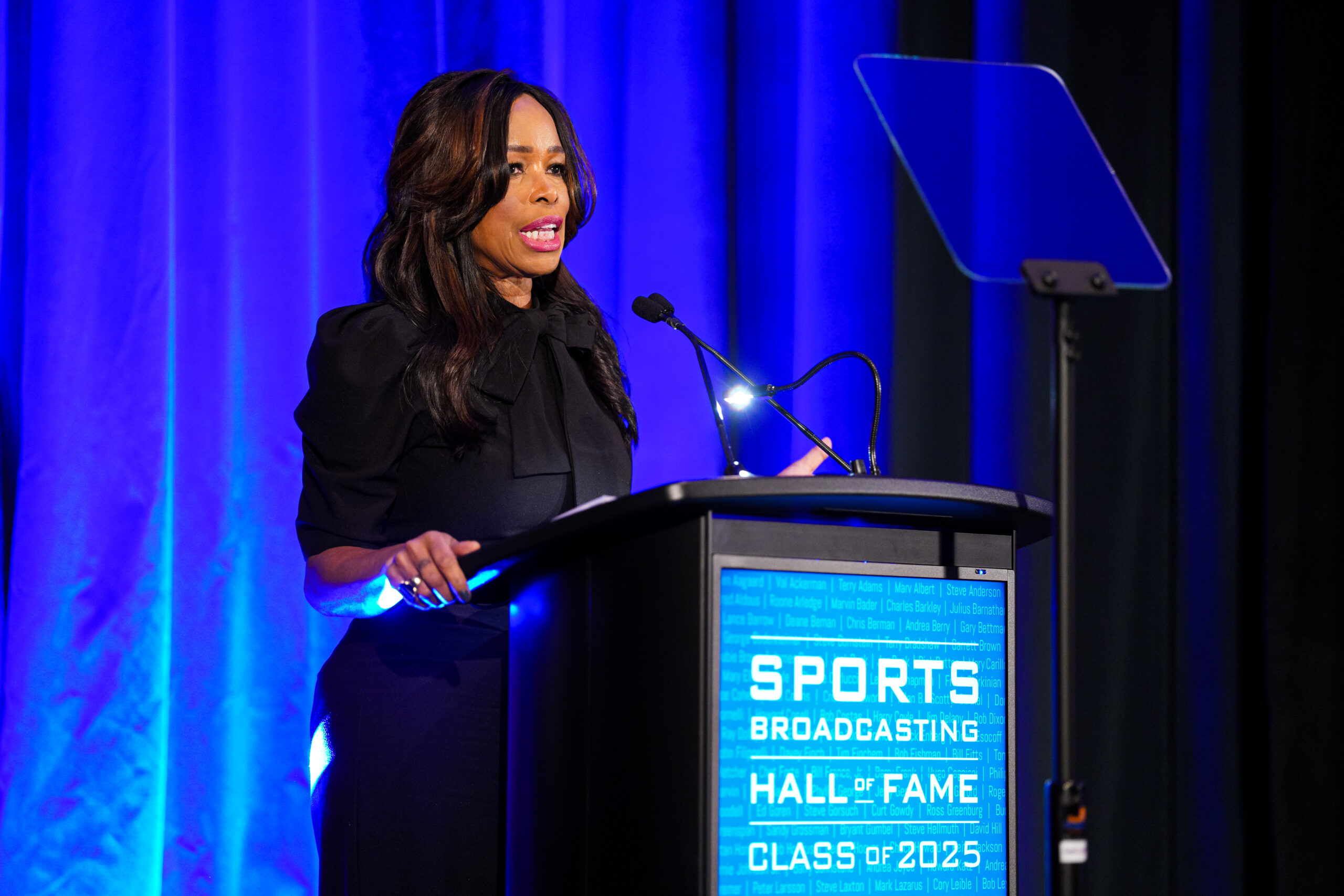
Pam Oliver
Pam Oliver’s combination of grit, grace, humor, and journalistic poise has defined one of the most remarkable careers in sports-television history. For nearly three decades at FOX Sports — and more than 500 NFL games — she has been the steady voice, the trusted presence, and the essential reporter who took the sideline position from accessory to necessity.
As a senior correspondent and NFL reporter at FOX Sports, Oliver is celebrated as a trailblazer in the sports-media landscape. She has long been recognized as one of the premier sports reporters on network television and is the longest-tenured NFL sideline reporter. Garnering widespread respect and admiration across the industry, her straightforward and candid interviewing style consistently delivers topical and substantive reports. Her reporting expertise also extended to the NBA, college and women’s sports. Prior to FOX, she was an ESPN reporter, gaining football experience covering the NFL Playoffs and NFC Championship Games. In addition to her duties as feature reporter on NFL Prime Monday, Oliver covered each Monday Night Football matchup. Additional duties included NCAA Women’s and Men’s College Football and Basketball, the Little League World Series, and the NBA Finals.
Bill Rasmussen, the Entrepreneur Who Dreamed Sports Into a New World
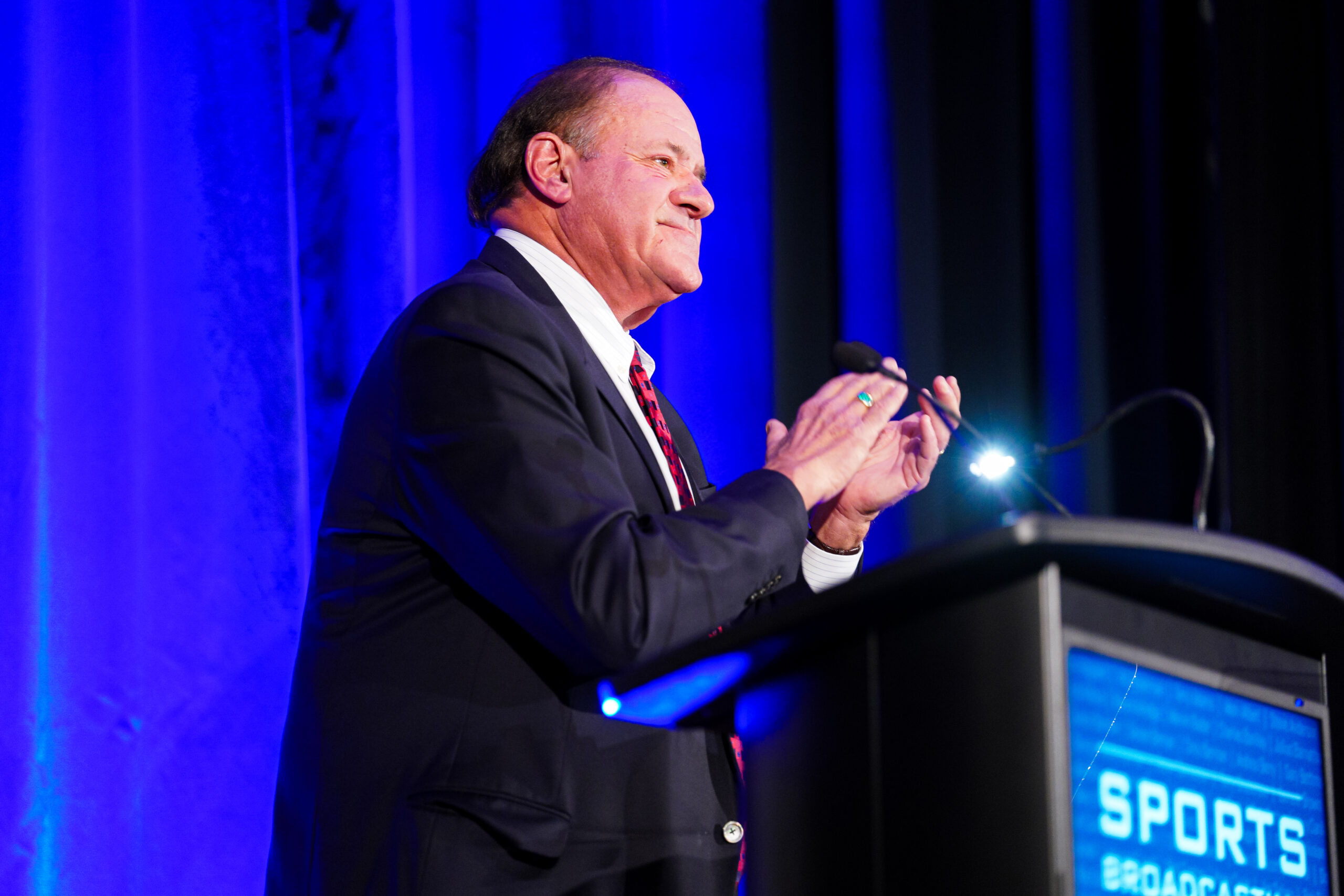
ESPN icon Chris Berman accepted on behalf of Rasmussen at the ceremony.
The lights hum to life inside a makeshift studio in Bristol, CT, as the countdown begins. It’s 6:59 p.m. on Sept. 7, 1979, and Bill Rasmussen stands just off the set, eyes fixed on the monitor as the opening seconds of an entirely new idea flicker into reality. He can hear the nervous breathing of young staffers behind him. He can feel the clock’s vibration in his chest as the show goes live. To everyone else, it is a shaky broadcast on an obscure cable channel named ESPN. To Bill Rasmussen, it is the beginning of a revolution, the moment when the sports world pivots toward a future only he could see.
The founder of ESPN, Rasmussen changed the nature of the relationship between television and sports. He founded the network in the summer of 1978 and, by the following year, had found an investor and had the network on-air. His vision also extended to programming: he created the SportsCenter brand, which is still core to the mission of ESPN. And he changed the relationship with advertisers, getting Anheuser Busch to ink its largest cable-TV advertising contract ever. Although Rasmussen’s time at ESPN was relatively short, his vision and impact will live on forever. ESPN icon Chris Berman accepted on behalf of Rasmussen at the ceremony.
Dave Barron, Brandon Costa, Jason Dachman, and Ken Kerschbaumer contributed to this report.