SVG Campus Shot Callers: Kurt Sutton, Director of Broadcast Operations, Clemson University
From ESPN to PawVision videoboard shows, the industry vet leads hundreds of live events per year
Story Highlights
The pool of production and operations talent in sports media runs much deeper than the national networks. SVG Campus Shot Callers spotlights the behind-the-scenes leaders powering the massive wave of college sports productions available to fans today. Across athletic departments nationwide, these administrators manage teams, oversee technology investment, mentor students, and ensure that hundreds of live broadcasts make it to air each year. This series highlights their journeys, philosophies, and the vital role they play in shaping live sports.
The past decade has marked a golden era for Clemson University Athletics, defined by sustained excellence across multiple sports and a national spotlight that rarely dims. From College Football Playoff championships to NCAA titles in men’s soccer and deep postseason runs across the department, Clemson’s success has played out on some of the biggest stages in college sports—and just as consistently, on television screens nationwide.
Helping shape how those moments reach fans is Kurt Sutton, Director of Broadcast Operations at Clemson University, who has spent the past eight years overseeing countless live productions that originate from campus. During that span, Clemson’s in-house team has grown into one of the most prolific operations in the country, producing 230 live events last year alone—totaling more than 520 hours of content—including 43 games airing across ESPN’s linear networks. In addition to managing broadcasts across every ESPN platform, Sutton is responsible for PawVision videoboard productions for football, basketball, and gymnastics, while also helping guide the department’s broader engineering and technology efforts.
In this edition of SVG Campus Shot Callers, Sutton reflects on his time so far at Clemson through a production lens, his belief that live television should be both excellent and enjoyable, the unexpected role of tools like 3D printing in modern workflows, and why attitude and curiosity matter just as much as technical skill in building a lasting career in sports production.
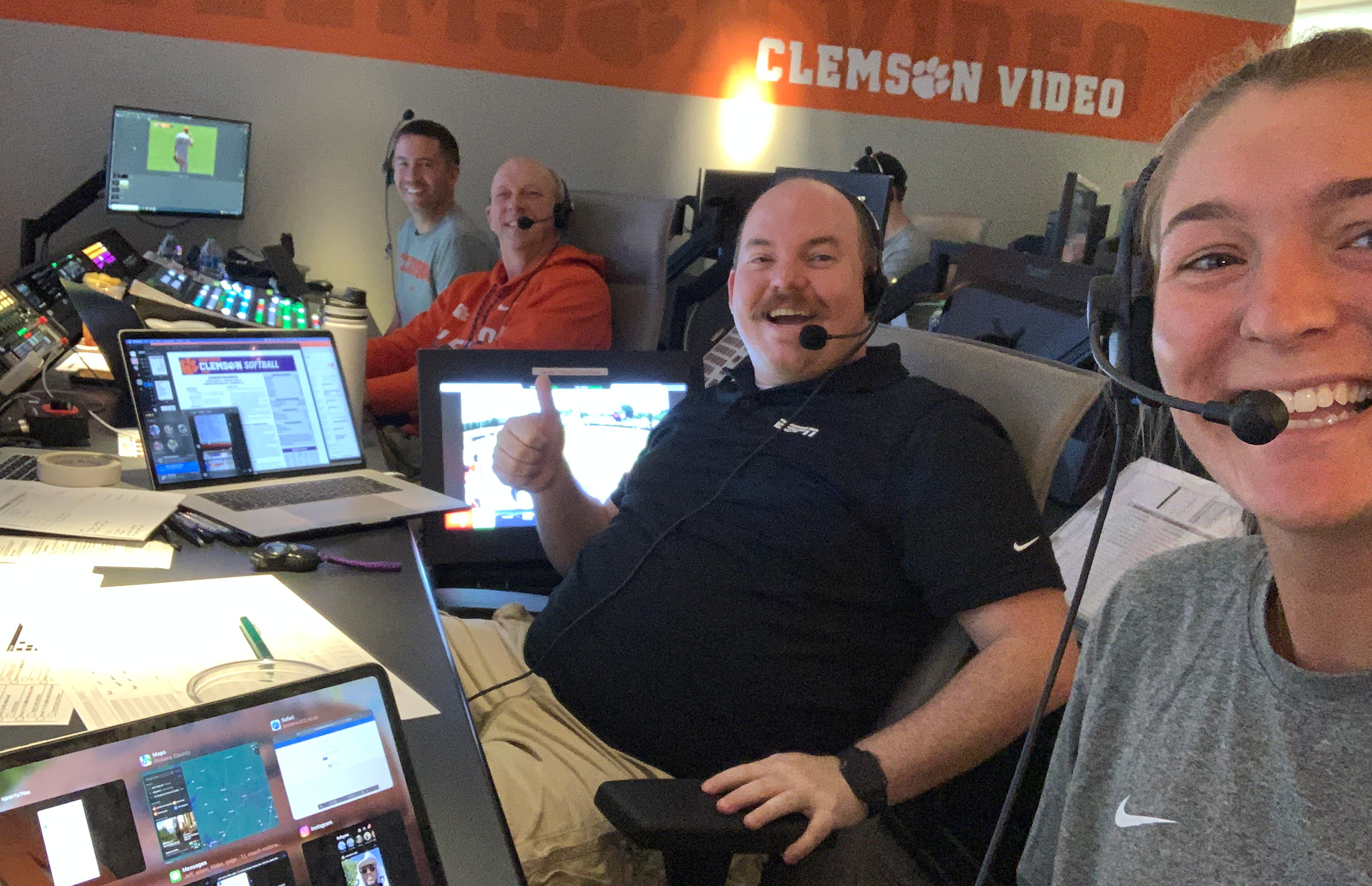
Sutton (second from right) at the front bench of Clemson Athletics’ control room prior to a live production with (from left) Matt Glenn, Rick Bagby, and Cora Wichelns. (Photos: Kurt Sutton)
What are the key responsibilities of your current role?
In my role, I help to direct or produce nearly every broadcast that comes from Clemson, so I am involved in the look and feel of everything we produce out of Clemson. If you’ve watched a Clemson sporting event in the past 8 years, I was fortunate enough to have a hand in it to some degree. I also help oversee our engineering department, which involves not only our broadcasts but other athletic department technology needs.
What is one core philosophy you try to live by when managing your team/operation?
TV should be fun. It’s not rocket science; it’s not brain surgery. It should be done at a high level, but it should also be a good experience not only for the viewer but for the people making it. Producing live television is a fun job. It’s a cool job. It should be something that we all look forward to get to do, instead of something we feel burdened to do. And when all the pieces are parts are clicking, there isn’t a better feeling in the world.
What is one key technology investment that your department has made that you feel as greatly improved your productions, workflows, or how your team operates?
3D printer. We have been able to design and create parts that either solve unique problems or help to save the athletic department money. Being able to prototype a new accessory or even print a piece that we can use every day has been a really cool aspect that we hadn’t considered in the past. Just one example is that we designed and printed a shotgun mic holder for our cameras that allow us to mount a mic without needing an eye piece attached to the camera. It’s a little thing, but it serves a direct need we had for years. We have also been able to prototype parts in the 3D printer that can be tested before taking to the campus machine shop to have them created in a more durable metal format.
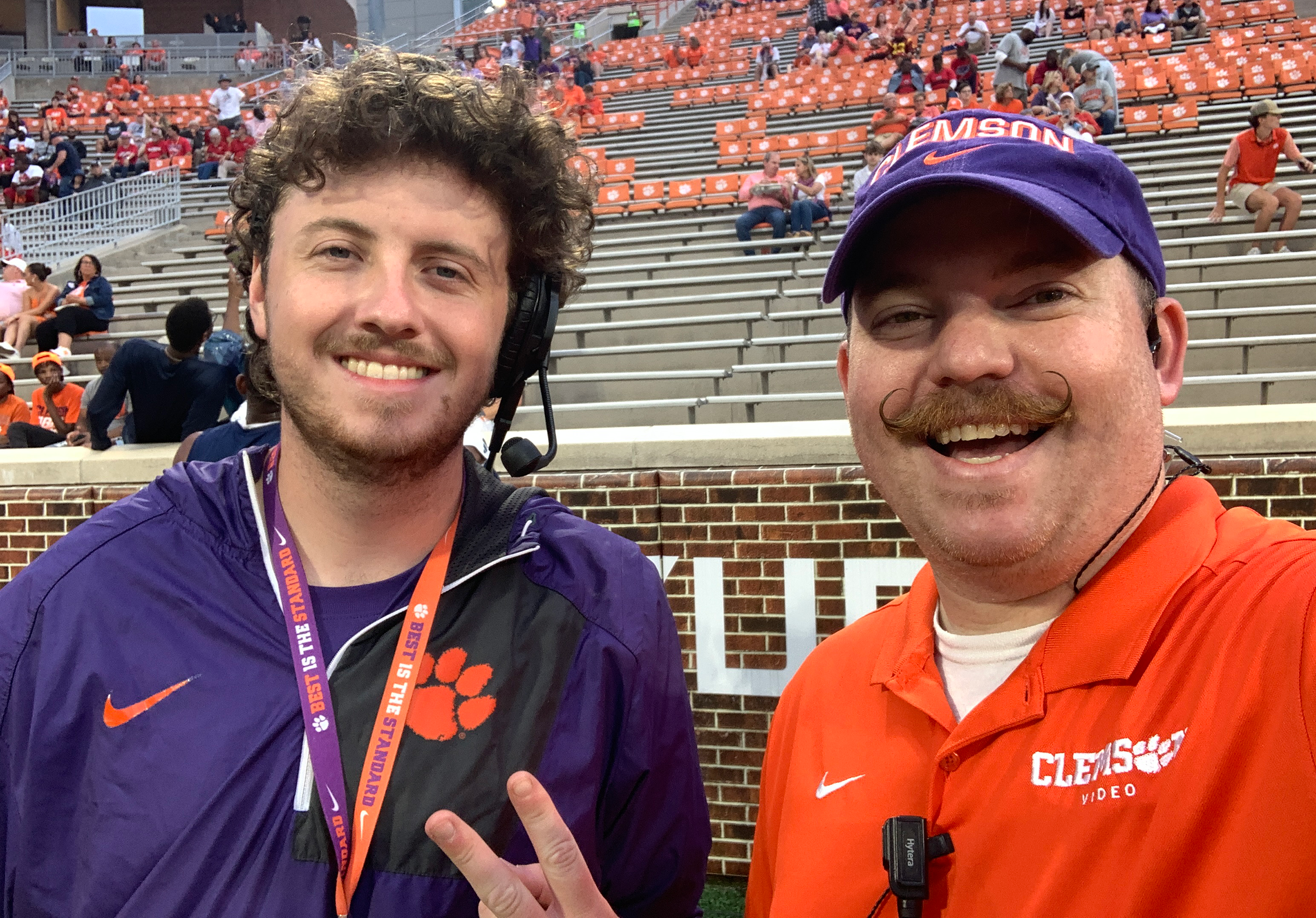
Sutton (right) on a Clemson Football game day with department colleague Connor Bostic.
How did you get started in sports production? What made you want to pursue this career?
I graduated from Ball State, originally wanting to be a film student. I found an on-campus job working as a Production Assistant for the university-owned PBS station, which also produced Ball State sports along with other live productions. I was fortunate enough to get to learn from the late Bill Bryant, and through his mentorship I fell in love with live television and sports production. Ever since then, I’ve loved live television and live production. He helped to show me just how cool of a job it was, while also demonstrating many of the skills needed to produce a high-quality broadcast in any environment. I owe a huge debt to him and everyone at Ball State who helped ignite my passion for live television production. And since then, I’ve been in television ever since.
What is your favorite event(s) you’ve ever worked?
One of the coolest parts of working in television is that you get to witness history first-hand. The best example is during the first full season of Clemson softball, they hosted NCAA regionals in their brand new stadium. I was in the producer seat every game of those regionals and got to be part of the very first Clemson softball team to play in, host, and win a NCAA regional. That is something that is so uniquely special that it is impossible to imaging getting that opportunity anywhere else.
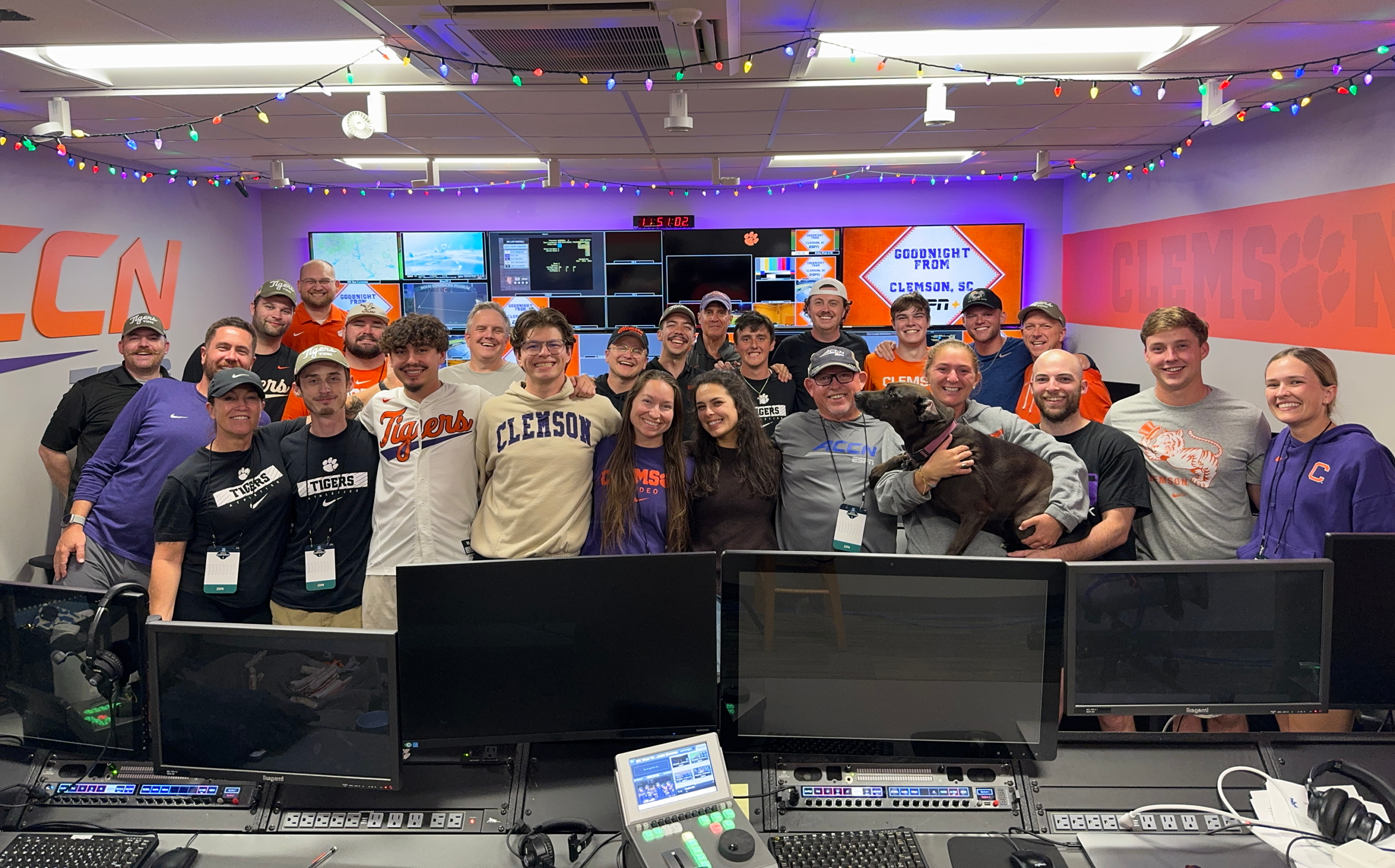
Sutton (far left) with the Clemson Video crew during 2025 NCAA Baseball Regionals.
What’s one piece of advice that you regularly give your student workers?
People will remember you for your willingness to learn, your desire to improve, and your ability to be part of a team. You can always learn. I can teach skills, but I can’t teach character or mindset. Television production involves a lot of long nights, weekends, and varying types of weather, and life is too short to deal with people who make you miserable. Longevity in this industry is just as much about skillset as it is about attitude, so be the type of person you want to work with.
If you would like to nominate someone in collegiate athletics administration to be featured in SVG Campus Shot Callers, please email SVG Director of Digital Brandon Costa at brandon@sportsvideo.org.