How Águilas Cibaeñas Dominican Winter League Games Are Locally Produced for Global Audience
Broadcasts are 100% produced locally from home stadium, Estadio Cibao, in Santiago, DR
Story Highlights
One of the most decorated franchises in the Dominican Winter Baseball League is reaching fans far beyond the Caribbean. Through locally-produced broadcasts distributed internationally on MLB Network via the MLB app, Águilas Cibaeñas is showcasing Dominican baseball on a global stage.
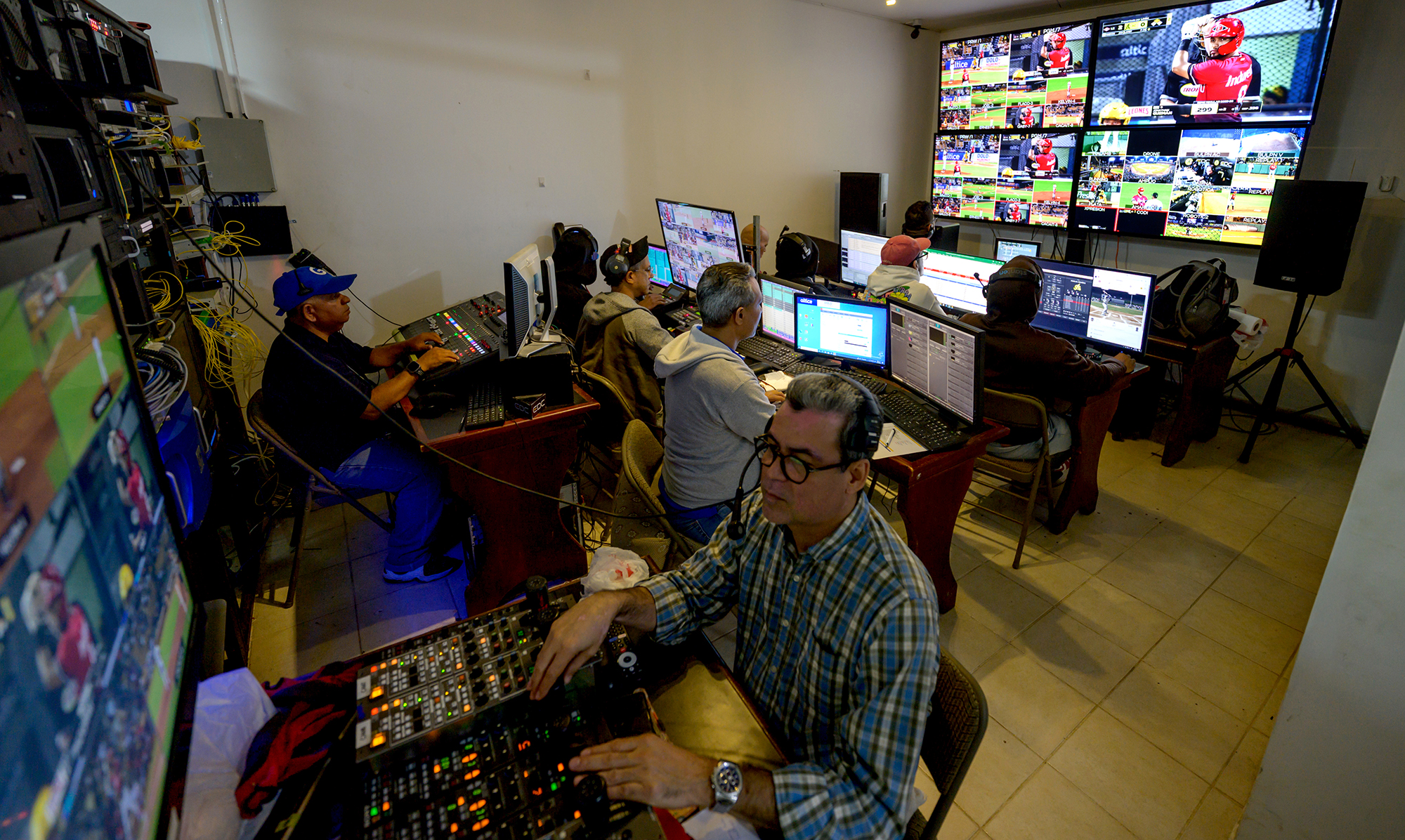
: For Águilas Cibaeñas broadcasts, the main signal originates from a permanent master control room installed inside the stadium, which includes switching, replay, graphics, audio, and transmission.
Broadcasts are 100% produced locally from the team’s home stadium — Estadio Cibao — in Santiago, Dominican Republic.
According to Kenny Núñez, Executive Producer Águilas Cibaeñas/EDC Broadcast, “the goal has always been to execute them at an international level.”
Núñez, who works for Eventos Deportivos del Cibao (EDC) — the broadcast rights holder for Águilas Cibaeñas — and his team are producing the games specifically for streaming distribution.
“What makes it special is that it’s a local Dominican crew doing international television. I’ve taken everything I’ve learned working in the U.S. and passed it on to the crew, and they’ve grown tremendously,” says Núñez, who has worked in baseball television since 2005. He is also a field producer and technical director in the U.S. for CommuniCore Inc., a corporate and live event production company.
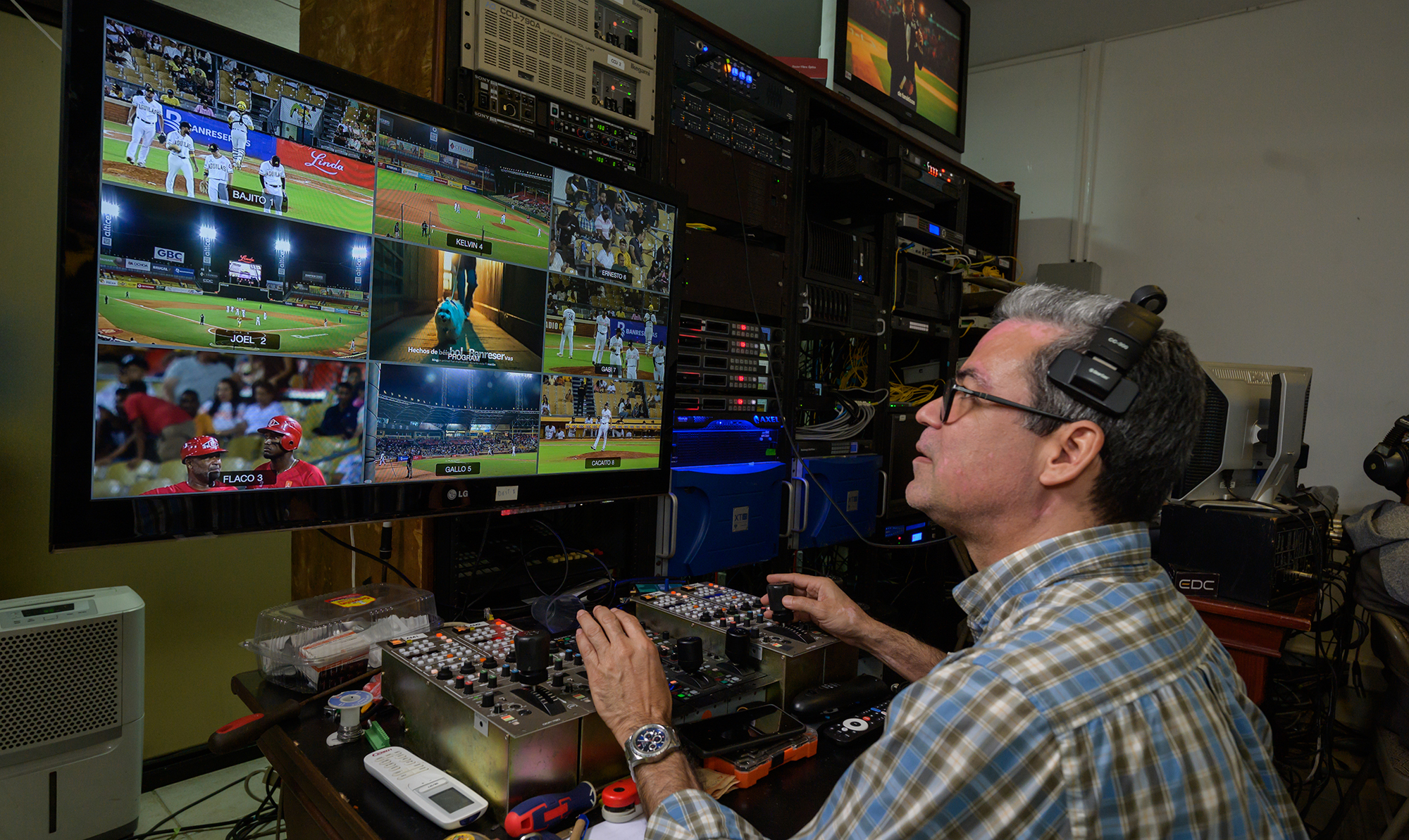
Behind-the-scenes of the broadcast production for the Dominican Winter Baseball League.
He explains that from an operations standpoint for the Águilas Cibaeñas broadcasts, the main signal originates from a permanent master control room installed inside the stadium. The area “functions very much like a compact truck environment,” where Núñez’s group handles everything from switching and replay (EVS is the vendor), to graphics, audio, and transmission.
EDC also partners with SERTELSA, a Dominican Republic-based provider of broadcast rentals, mobile units, and satellite services for the production of games. All of the broadcasts’ graphics, creative animations, bumpers, and scorebug, which are used in Ross XPression, are designed and produced by Núñez’s company On Rec Media.
“There are many nuances the average fan doesn’t see,” says Núñez, who oversees the editorial vision, technical execution, and crew coordination for the broadcasts. “A lot of behind the scenes coordination happens between replay, graphics, camera coverage, and editorial decision making, especially in a league where many players are active MLB athletes. Timing, pacing, and cultural context are critical to telling the story properly.”
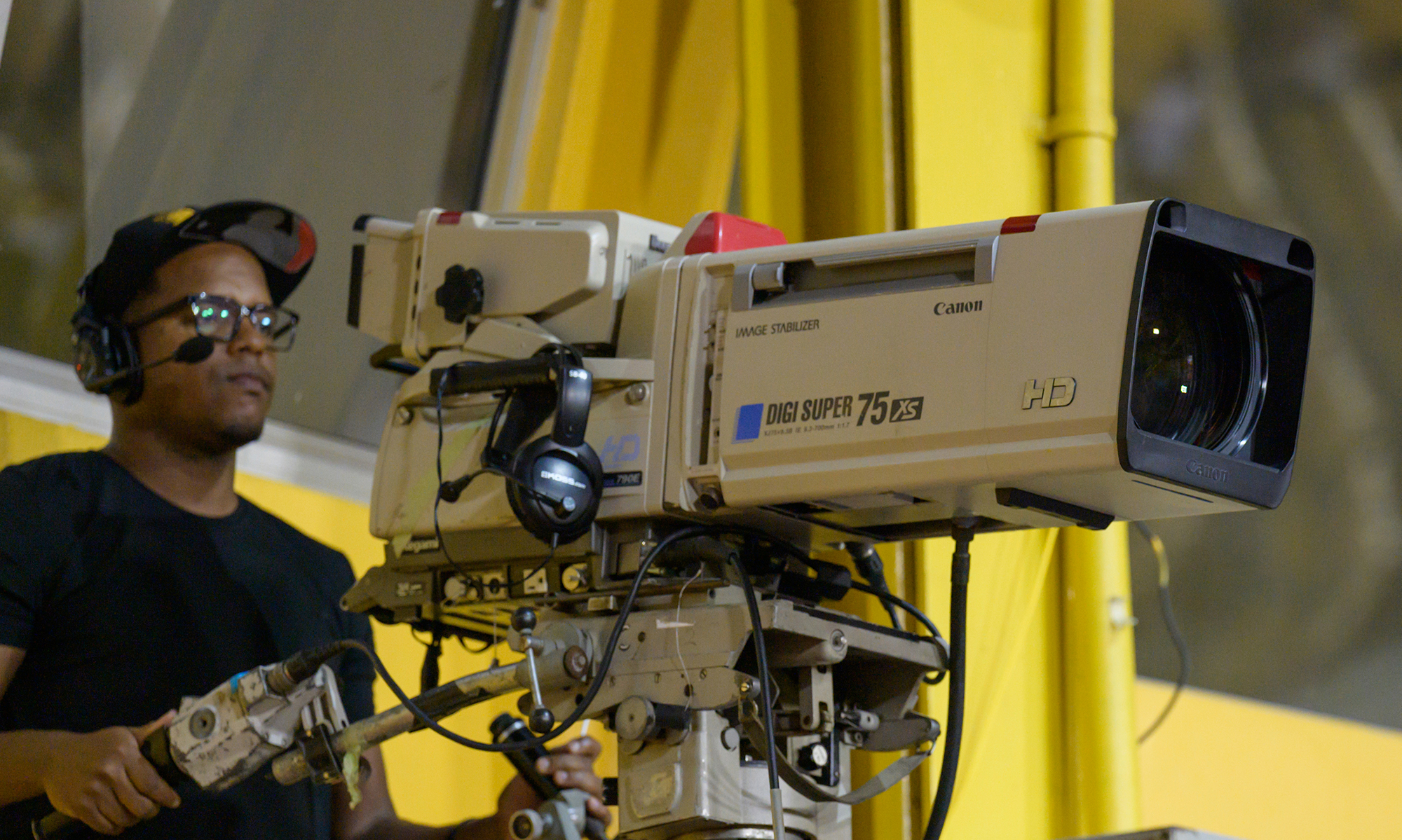
The standard camera complement normally includes 12 manned cameras.
From an editorial lens, EDC’s focus is storytelling, and according to Núñez, the broadcast and overall production aim to capture the different energy, emotion, intensity, music, and culture that makes “Caribbean baseball unique for U.S.-based audiences.”
Production staff relies on the LiveU systems for primary transmission and backup contribution paths. In addition, the signal is also distributed through fiber optics for the local broadcast partners. Commentators, including play-by-play caller Santana Martínez and analyst Kevin Cabral, are situated on-site at Estadio Cibao in dedicated broadcast booths for the live production.
Meanwhile, the main switcher, Núñez says, is a FOR-A Hanabi HVS-2000. For cameras, there’s a combination of Ikegami and Sony HD cameras. Games are produced in 1080i resolution.
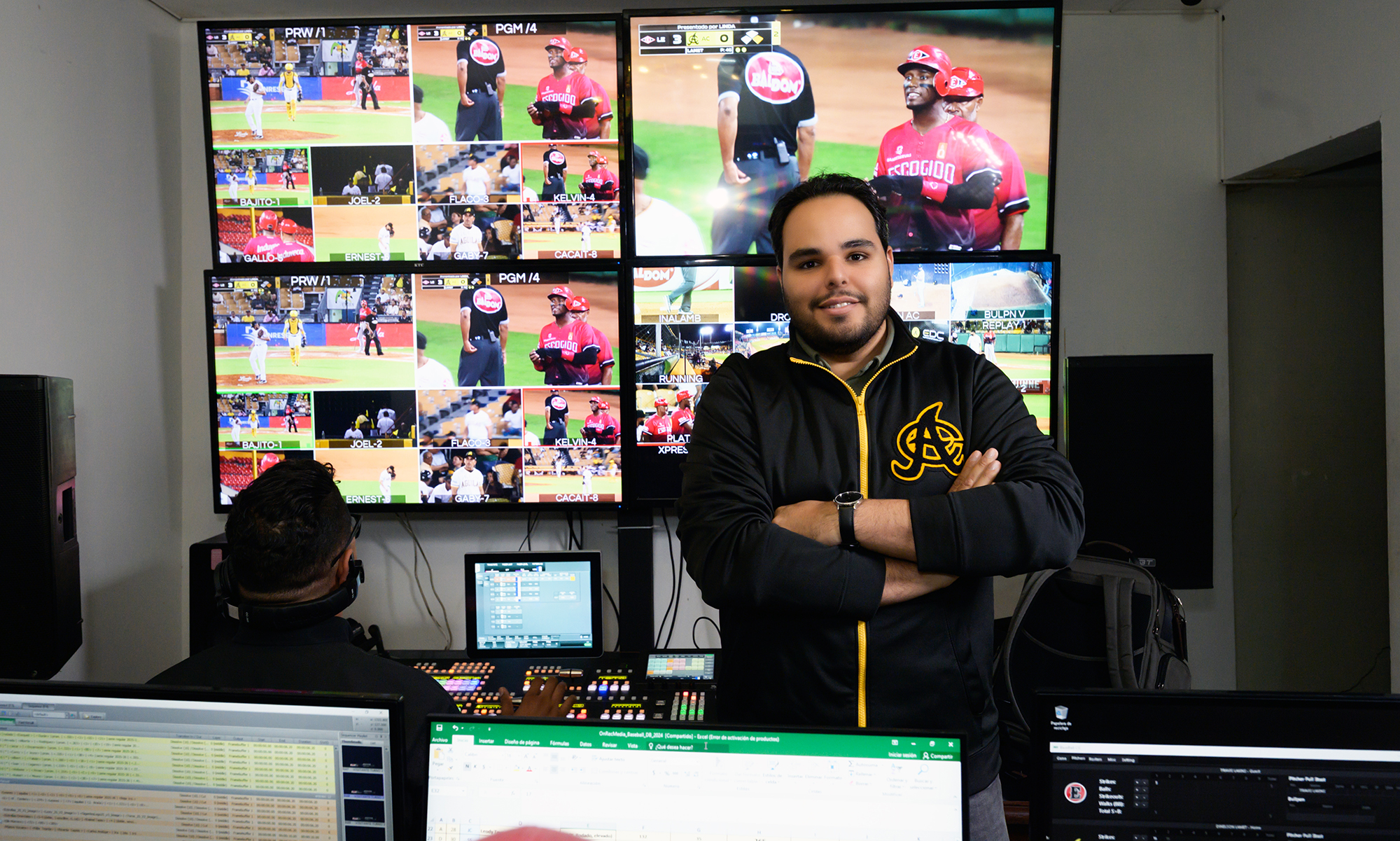
The standard camera complement normally includes 12 manned cameras, three Panasonic robotic PTZ cameras, and several Marshall point-of-view cameras. Núñez says he also operates a DJI Ronin with a Sony A7R for dynamic handheld shots and a DJI Mavic Pro 4 for aerial shots depending on weather conditions.
The audio for the Aguilas Cibaeñas productions is handled through a mix of Shure and Sennheiser microphones for field effects, dugouts, and the commentary booths, “with a big focus on capturing the crowd and the natural sound of the game,” says Núñez.
He adds, “These productions are rewarding but not simple. The pace of the winter league, frequent games, weather, and constant roster changes all add layers of complexity. Executing a consistent, high-level broadcast under those conditions requires strong coordination and flexibility from the entire team.”