SVG Sit-Down: Pac-12 Enterprises’ Michael Molinari Says State-of-the-Art Production Facility Is ‘Open for Business’
Besides producing OSU and WSU athletics events, the facility is seeking third-party clients
Story Highlights
In advance of the 2023-24 college sports season, Pac-12 Networks moved from its longtime home in downtown San Francisco to a new state-of-the-art production facility in nearby San Ramon, CA. The facility was planned prior to the shocking exodus that left just two schools in the Pac-12 Conference: Oregon State and Washington State. Today, the Pac-12 Enterprises operation in San Ramon is not only serving its two member schools (and potentially the four recently announced programs set to join in 2026) but is also seeking out third-party clients that can benefit from the robust production capabilities the fully SMPTE ST 2110 IP facility has to offer.
SVG sat down with Michael Molinari, who was named SVP of business development and studio operations for Pac-12 Enterprises in May, to get an idea of how the facility is being used today. Molinari also discusses potential production plans for additional Pac-12 Conference members, its partnership with The CW for OSU and WSU football, some of the common misconceptions around REMI production, how he’s looking to grow the business beyond member-school productions, and what he’s most excited about for the 2024-25 Pac-12 athletics season.
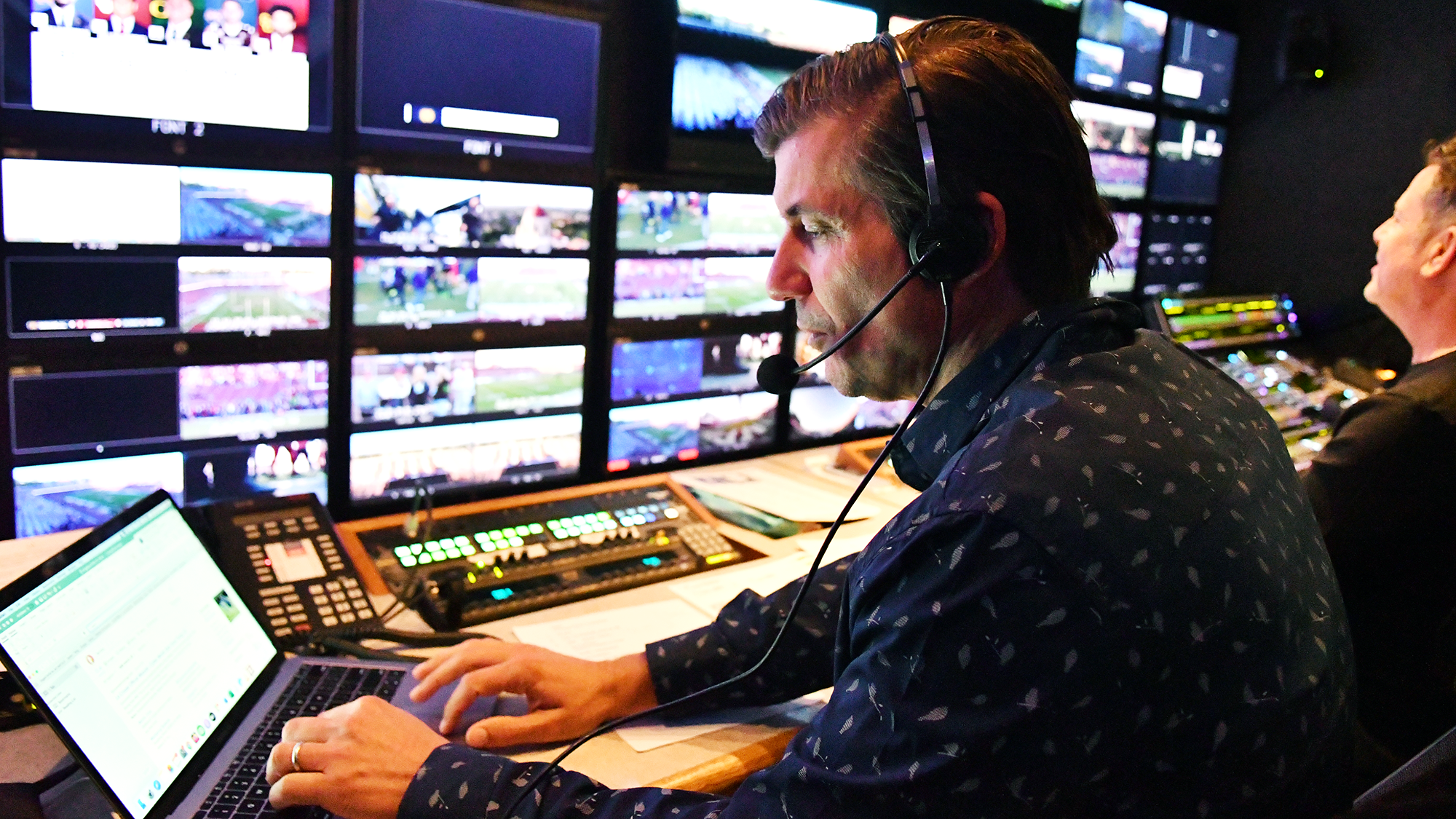
Pac-12 Enterprises’ Michael Molinari: “The charge for the past 12 years was to produce the 850 events for the conference network; now the charge is to create revenue for our schools. It’s a more entrepreneurial model.”
Let’s start with this week’s big news. With four schools joining the Pac-12 in 2026, will the Pac-12 Enterprises facility in San Ramon be handling those productions?
Future details will, of course, be determined by members of the Pac-12. What I can tell you is, after recently producing a Colorado State football game from our facilities in San Ramon, we are excited for the possibilities and confident that we can efficiently produce high-quality broadcasts from football to Olympic sports for our future new members.”
How does the current Pac-12 Enterprises model differ from the previous Pac-12 Networks operation?
The biggest change is, we’ve switched from a 24/7 network model to a model where we produce programs for ourselves, our conference’s schools, and [third-party clients]. The charge for the past 12 years was to produce the 850 events for the conference network; now the charge is to create revenue for our schools. It’s a more entrepreneurial model.
I believe we can increase from those 850 annual events to closer to 2,000 events. First off, after the Pac-12 academic year, the building was closed during the summer for the most part. And the facility was not really operational on Monday and Tuesday because of the way the Pac-12 sports schedules were laid out.
During the pandemic, we had both FS1 and ESPN doing basketball out of our facility via a packager, so we’ve had a little bit of outside business prior to now. But, for the most part, we’ve produced our own events. That has all changed now, and we are officially open for business from anyone looking to produce live events efficiently and with high quality.
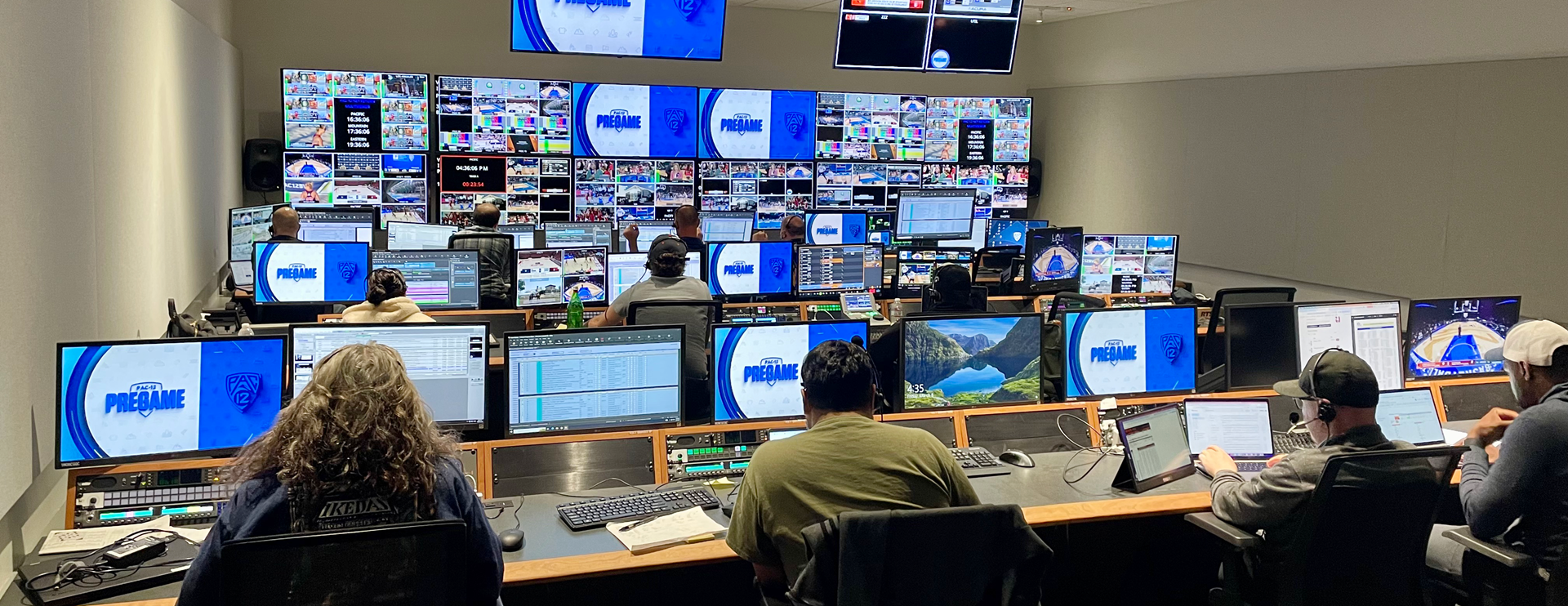
Pac-12 Enterprises’ new San Remo, CA, facility produces traditional REMI shows, from five large-scale control rooms, and software-defined productions, from four SDP control rooms.
As of today, what events are being produced out of the facility?
Right now, we are scheduled to produce about 100 events each for Oregon State and Washington State this [academic] year. In addition, we are producing 11 of the Oregon State and Washington State home football games for CW. Nine of them will be REMI productions from our facility, and two of them will be full onsite-truck games: Purdue–Oregon State [on Sept. 21] and the Washington State–Oregon State matchup [on Nov. 23].
How does the San Ramon facility produce these events remotely?
We have two main types of productions: traditional REMIs, where we bring cameras and audio into a large control room to create the show, and software-defined productions [SDP], which have fewer cameras and use vMix [live-production] software to create the show. Approximately 25-30 of those 200 events for our schools will be full REMI, and the rest will be SDP.
In terms of REMI, we have five large-scale REMI control rooms that can do a production as small as a four-camera basketball game and as large as a 12-camera show with two SSMOs, which we did for the Pac-12 men’s basketball tournament the last few years. In that case, we had another control room producing a three-person studio show so the entire event was taking place in Las Vegas with talent onsite, but the actual production was being done back here.
We have four SDP control rooms, and those shows typically have three or four cameras plus a lock off-camera onsite. We have a vMix operator doing the show in San Ramon plus a graphics person. The interesting thing is that the equipment, including the box that everything runs through, is actually onsite at the event. Essentially the entire operation is remoted in from San Ramon, and we get a full program signal from Oregon State and Washington State.
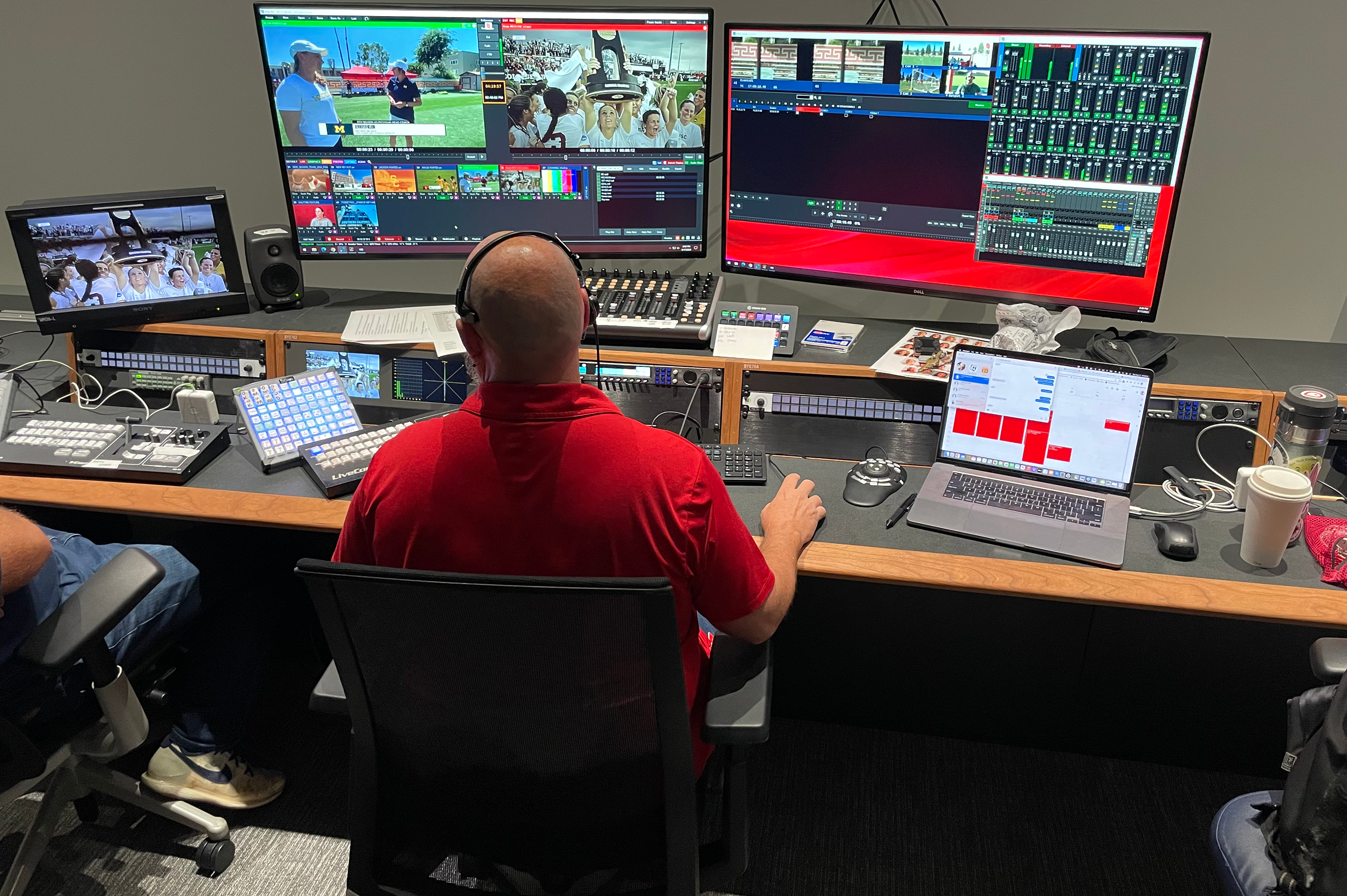
Four centralized control rooms are built around vMix, a software-based vision mixer. Shows run from these rooms can be produced by as few as two operators. (Photo: Pac-12 Networks)
You mentioned the Colorado State football-game production. Can you provide more detail on how that was handled?
Yes, that was really promising and exciting. We produced the Colorado State football game [against Northern Colorado on Sept. 7] from our facility with a new workflow. Obviously, we don’t have an established line of connectivity with Colorado State like we do with Oregon State and Washington State. So we used a mix of Internet 2 and other traditional transmission services to give us that 1/5-second latency.
It was essentially a trial run at Colorado State, and it went great. That’s what we’re basing our model on: you tell us where you need us to do a show from, and we will go there, find a way to get the signal back to our building, and produce the show from here. That way, we are able to have all the cost-efficiencies of not having to travel so many people to site to do the games but still maintain a high-quality production.
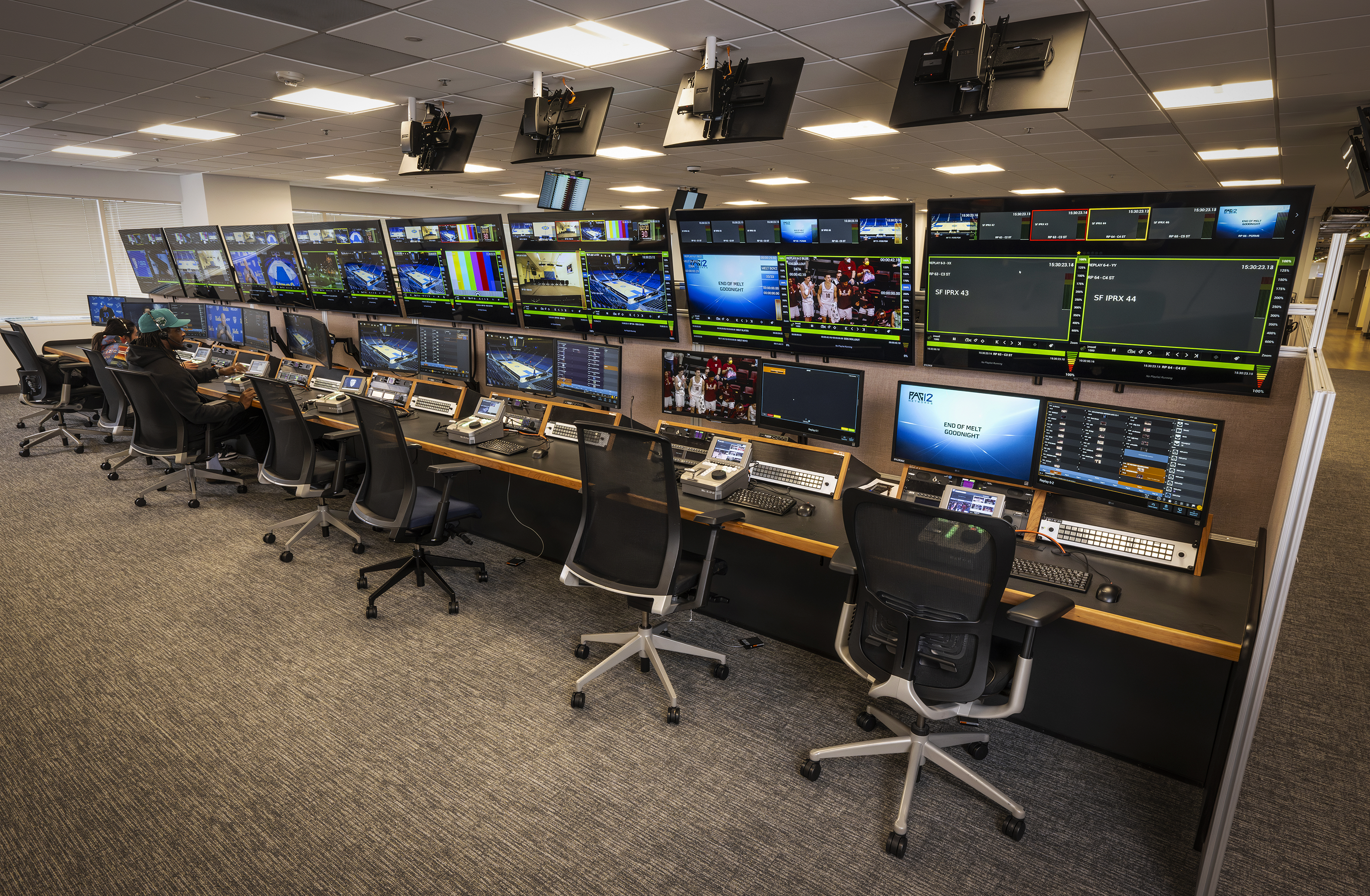
Pac-12 Networks’ new facility features two large bullpen areas dedicated to graphics (Ross Xpression) and replay (Evertz Dreamcatcher) for REMI live game production. (Photo: Advanced Systems Group)
How has the relationship with CW been in producing OSU and WSU football games?
The relationship with The CW has been fantastic, a true partnership.
One thing I forgot to mention is that we’re also doing The CW Football Saturday studio show for the CW every single week for all 14 weeks of the season — whether we are doing the Pac-12 game that week or not. We have host Mike Yam and a rotating panel of expert analysts every week, and they’ve been really impressive.
We’re working together and collaborating based on feedback from both sides. Even though we didn’t know each other well, [CW Sports SVP] Jason Wormser and I were both at ESPN in Bristol, CT, in the ’90s. We have a bit of a connection, and the communication between the two of us — and the two teams overall — has been spectacular.
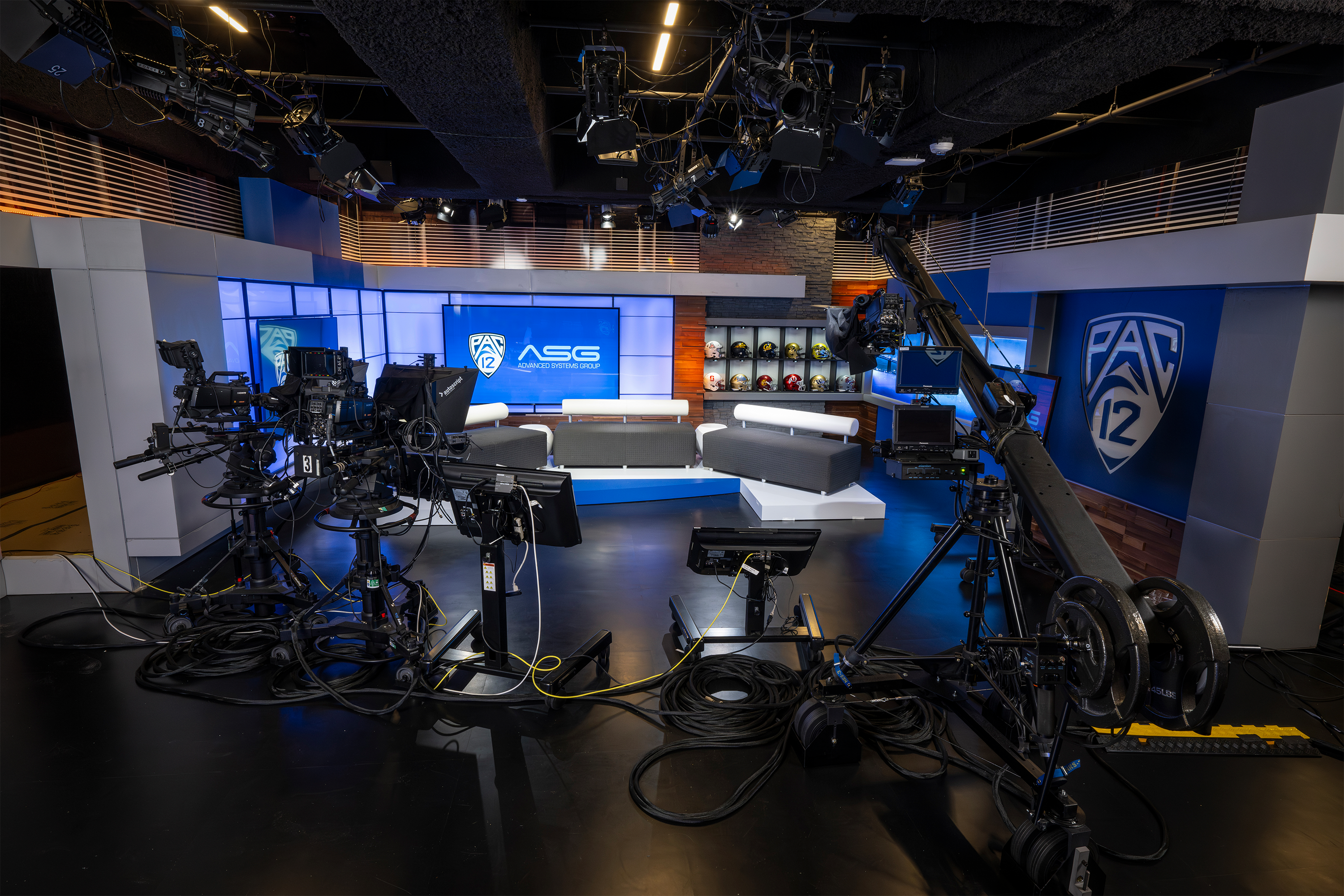
Pac-12 Networks’ new production facility is built to the IP standards SMPTE ST-2110. It has a single studio space for anchoring linear television coverage. (Photo: Advanced Systems Group)
What are some misconceptions you see around the industry in relation to REMI productions?
When people think REMI, they often think small. But that doesn’t necessarily have to be the case, and we’ve proved that to be true.
The other thing that people often run into with REMI is the issue of latency. I know, at other networks, latency can be acceptable up to 2 or 3 seconds, but we can provide latency of just 1/5 of a second. I think that’s the game-changer for us because most announcers, when they’re looking at their monitor, don’t even know it’s delayed.
REMI is not a limitation. It’s just a more efficient way of doing television. And that’s what we’re striving to do.
We have some brilliant engineers that have made all this happen. [Director Of Infrastructure] Howie Chung is our connectivity expert and [Lead Broadcast Technology Engineer] Hieu Ho is our architect of the building. Those two guys have made this building incredibly efficient, and, at this point, we can do a production from almost any arena on earth.
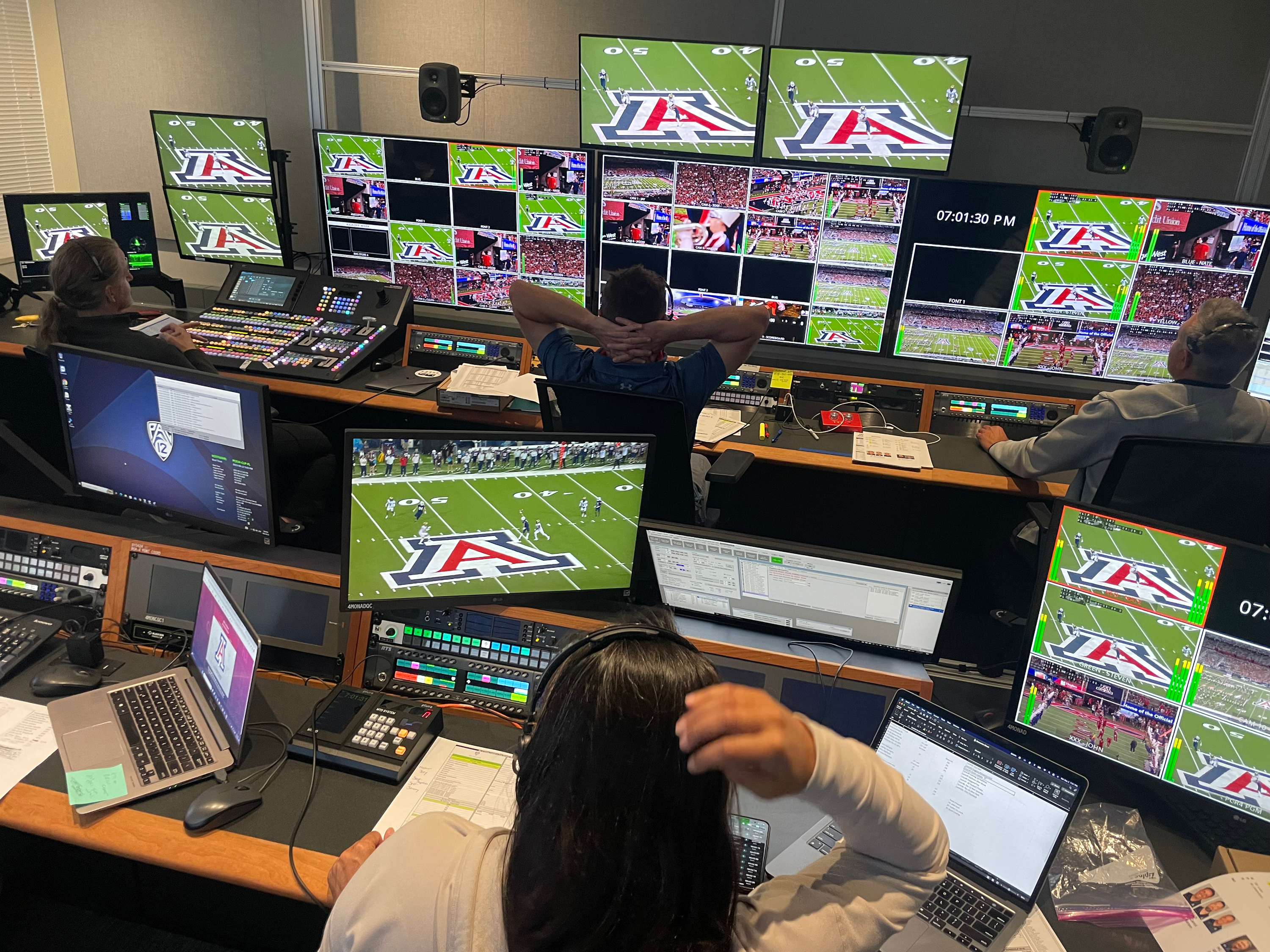
In August 2023, Pac-12 Networks opened a brand-new production facility San Ramon, CA. Its facility in downtown San Francisco had served as its headquarters for its first 11 years. (Photo: Pac-12 Networks)
How have you been trying to spread the word that the Pac-12 Enterprises facility is open for business?
At this point, I’d be shocked if there’s anyone in the business who hasn’t heard from me in some fashion over the last three months about using our facility.
I’ve been a freelancer in sports television for more than 30 years. I started in the mail room at ESPN in 1993 and have received a paycheck from every major network at one point or another. So I know a lot of people in this industry, and I think people have respect for the quality television that I want to do. I think that has helped as I’ve had discussions with people in the industry.
We started only in June, so it has been a bit of a slow start, but we realize that a lot of people already have plans in place for football and [other fall events]. I can say that we’ve had a lot of visitors here and a tremendous amount of interest. I can’t talk about some of the relationships on the horizon, but I can tell you that it’s very promising, and I expect things to really heat up in the coming months.
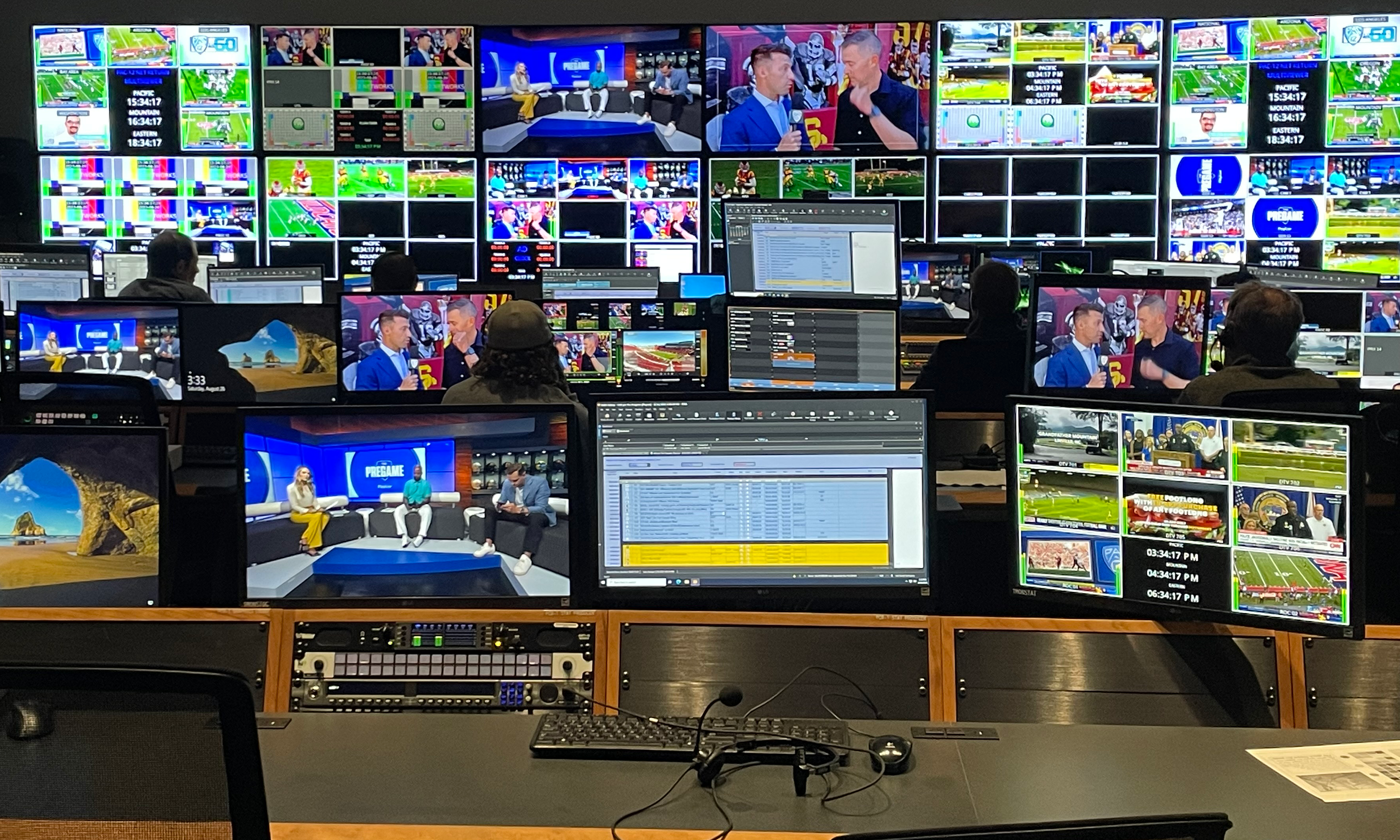
Pac-12 Enterprises now has five large-scale REMI control rooms
Give me your client pitch. Why is this facility ideal for producing events remotely compared with other options?
We now have over 10,000 live events produced at over 125 venues — with mostly the same core group of production and engineering people. We were in downtown San Francisco until last August and then moved out to our new facility here in San Ramon, but it’s essentially the same REMI and SDP workflows. This is a state-of-the-art facility, and I would put our technology and infrastructure up against anywhere else in the country.
I’d also put [our crews] up against anyone in the business. We have a rich talent pool of production people and technicians here in San Ramon and the surrounding area who have worked on both pro sports and college sports. Many of the people who worked with us all 12 years of Pac-12 Networks are still with us, so we have some really experienced professionals.
I tell people that it’s like having a core crew, except you don’t have to travel everyone to site. The show moves around, but your TD, A1, tape ops, graphics, and bug ops are the same people [for every show]. We are able to build and maintain that core crew, which is something that has largely been lost in the move to the REMI model. This way, we have a centralized group of people working together in the same building week in and week out. You’re saving all those [travel] costs with the REMI model, but you’re maintaining that core quality.
What are you most excited for as you begin a new era?
Ultimately, I’m most excited for how this facility can help our two schools succeed. Let’s face it, they got a very raw deal with how things played out. I think you can compete in this era only if you have the financial resources necessary to contend, and it’s my hope that this building can help provide the resources and exposure to give Oregon State and Washington State a leg up.
This interview has been edited for length and clarity.