SVG Year in Review — Audio Edition: More Music, More Mergers, Fewer A1s
Spectrum, sports betting, AI are other factors in sound for both broadcast and streaming
Story Highlights
Broadcast audio had another eventful year, not least because sports and entertainment came together at ever higher levels in 2024. The synergy was bookended by two halftime spectaculars: Usher at Super Bowl LVIII in February and Beyoncé in Netflix’s first-ever NFL Christmas doubleheader, the latter performance so jaw-dropping in its sprawling production that Super Bowl LIX halftime star Kendrik Lamar is likely considering additional wattage for his upcoming Superdome show.
It also further increases the value of the biggest entertainment entity on Earth who has never done a Super Bowl show: Taylor Swift, who ended her Eras tour last year with more than $1 billion in black ink. (Beyoncé has headlined a Super Bowl Halftime Show, in 2013.)
Now, That’s Entertainment
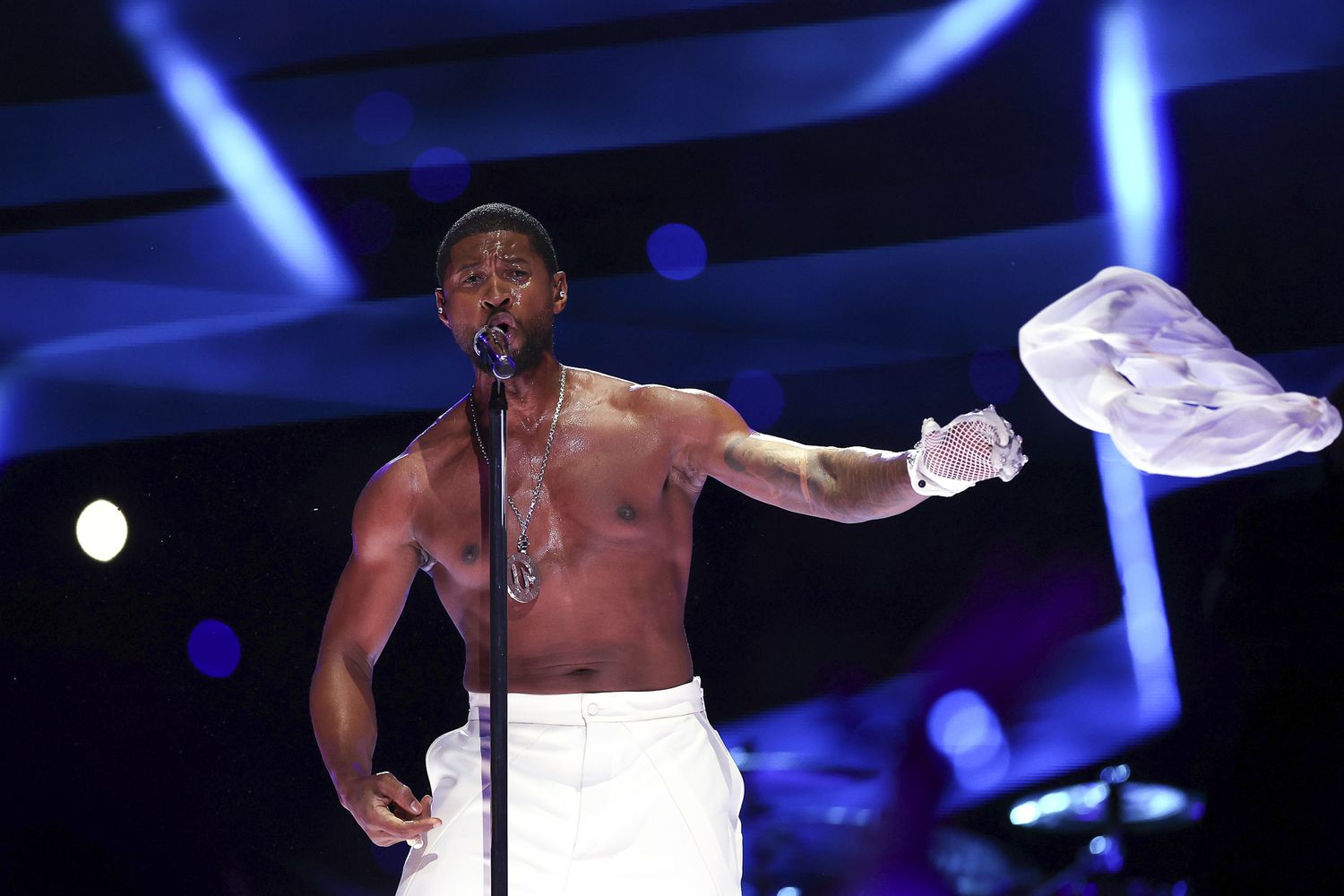
Usher headlined the spectacular Super Bowl LVIII Halftime Show in February.
A particularly notable music/sports pairing was rapper Snoop Dogg as color commentator for both the 2024 Paris Olympics and college football on CW Sports. (Iconic quarterback Tom Brady went in the other direction, delivering a few zingers of his own at his Comedy Central Roast.) The 2024 NFL Draft featured performances by rappers Big Sean and Bazzi. The NHL offered five-time Grammy Award–winner Shania Twain during the Stanley Cup Final series, and Nashville’s Big Machine Music City Grand Prix featured mom-rockers Daughtry and country artist Riley Green.
The year’s notable sports-entertainment failure? Break dancing as an Olympics sport. It came and went in an Olympic instant, leaving only a few evanescent memes, such as Australia’s B-girl Raygun, who flopped, jerked, and kangarooed her way to a total of zero points.
“Nothing can feel like just a game or a concert anymore,” opines Michael Abbott, sound designer for the Grammy Awards and reality-TV competition shows. “Everything has to be an event. Stadiums and arenas are now built as television studios to produce both sports and music. The content goes up on huge video walls and through massive sound systems well before the game starts and well after it ends.”
Who Will Produce the Spectaculars?
The growing shortage of A1s got worse in 2024 as retirements increased. Workflow evolution since the pandemic has helped some: REMI and other remote-production techniques have been widely and successfully implemented, reducing the number of A1s needed onsite and, thus, the amount of travel required and increasing the productivity of the remaining A1 cohort.
However, natural attrition continues to occur, and it doesn’t take an AARP actuarial analyst to point out that the trend will only accelerate among audio crews, most of whom on the biggest network productions are in their 50s and 60s.
Growing Demand, Crowded RF Spectrum
The increasing use of on-player audio put more emphasis on intercom technology last year. The trend underscores both the diminishment of RF spectrum and the increased effort needed to get in closer to the action.
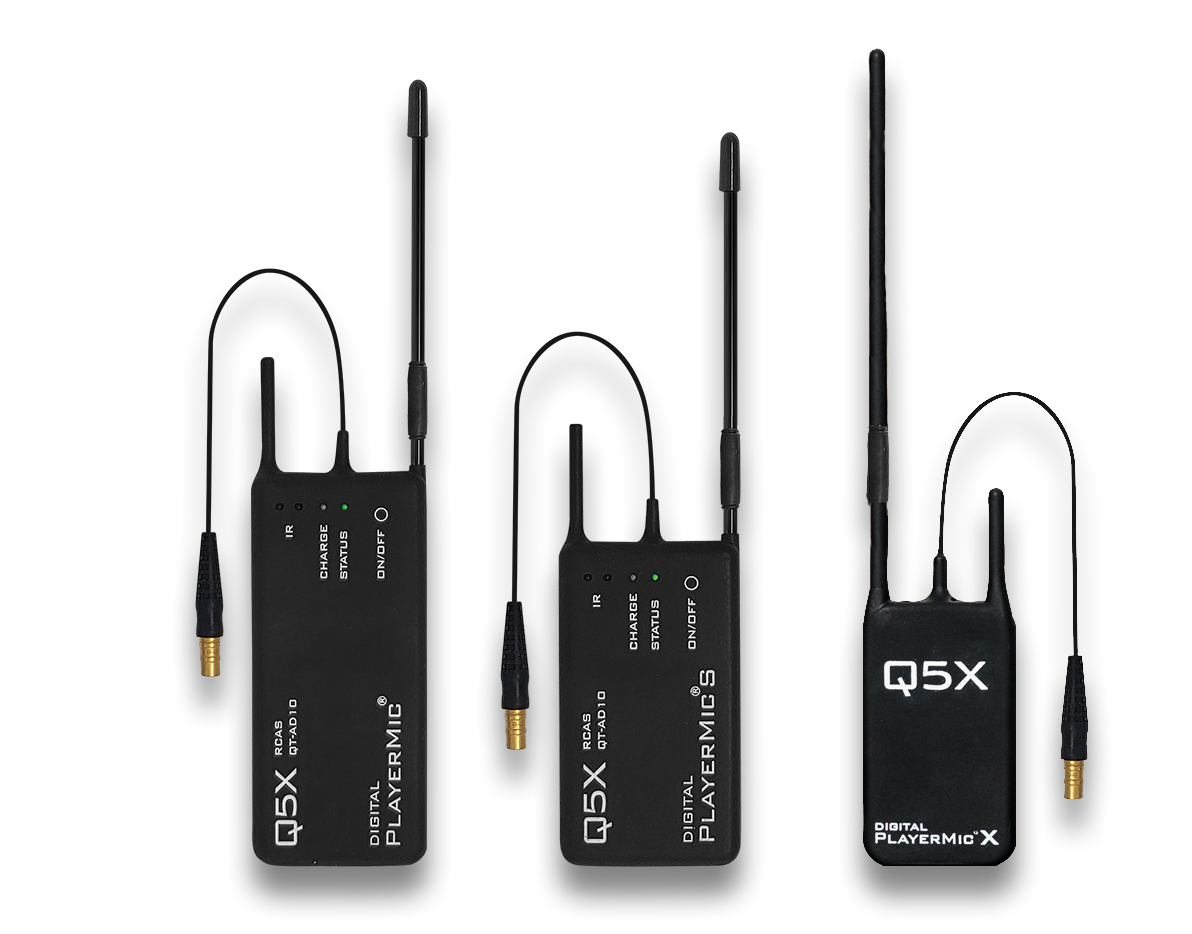
Devices to meet increased demand for player audio challenge use of busy RF spectrum.
The challenge facing intercoms for broadcast sports boils down to a simple equation: the number of wireless devices keeps growing while the available RF spectrum does not. This means that teams, leagues, and productions need to squeeze more devices into an increasingly crowded RF space.
“RF coordination can be difficult if not impossible at times,” says Clear-Com President Bob Boster. “To achieve a successful show, everyone involved needs to make sure they allocate enough time to properly plan their setup, working with the other suppliers and venue personnel to make sure everyone knows what to expect and where they will need to compromise.”
WMAS: New Kid on the Spectrum Block
In February, the FCC approved a regulation change, permitting operation and deployment of the new, more spectrally efficient Wireless Multichannel Audio Systems (WMAS) technology in the U.S. The technology allows more microphones to be used without allocation of more bandwidth.
The new rules permit WMAS to operate on a licensed or unlicensed basis in broadcast-TV bands and the 600 MHz duplex gap while preserving existing spectrum rights of others sharing those frequencies, which are heavily used by broadcasters as well as by theaters and music venues, corporate events, and webcasting.
“It is definitely the start of a new era of wireless-microphone technology,” says Joe Ciaudelli, director, spectrum and innovation, Sennheiser, which is among the vendors spearheading new products for WMAS. He notes the nearly six years the FCC spent considering the technology and the eight months it took last year before publishing its finding in the Federal Register. “We expect the competition to be rigorous.”
The Effect of Gambling
Spectrum took on another dimension in 2024 as online sports betting proliferated. Wagering on such platforms as FanDuel and DraftKings is not only on outcomes but can be as granular as individual plays and moments, so-called micro bets. The need for immediacy puts additional strain on cellular networks.
For instance, in the Louisville area last year, Verizon significantly expanded its 5G ultra-wideband service, deployed on its C-band spectrum — the culmination of the 5G C-band spectrum it acquired at an FCC auction — for use at both Churchill Downs, ahead of the running of the 150th Kentucky Derby, and the KFC YUM! Center arena.
Streaming Comes of Age

Thursday Night Football is at the center of Amazon Prime Video’s new sports division.
Amazon, Apple, and Netflix boosted claims for virtual territory for sports streaming in 2024. Amazon Web Services (AWS) operates eight massive data centers, whose services Amazon has been marketing to the sports industry directly, including to the NFL, NHL, F1, and the PGA. With the NFL’s Thursday Night Football franchise as a fulcrum, Amazon Prime’s new sports division has acquired production rights to the WNBA and NWSL in the U.S., with rights to external productions for the MLB’s New York Yankees, NHL’s Seattle Kraken, Overtime Elite basketball, One Championship multinational combat-sports events, and PBC Boxing; NASCAR and the NBA are on the Amazon Prime table for 2025 and 2026, respectively.
Audio can be a greater challenge for streaming than for broadcast, given the range of streaming devices and different ways they handle sound reproduction, as well as the environments they’re used in. Just as talking pictures in the 1930s learned from radio’s audio techniques, streaming audio for sports is largely a hybrid of broadcast sound. Amazon Prime Video Sports can reproduce the 5.1-surround audio it takes in from its production partners, such as for Yankees and Kraken games.
On the other hand, Thursday Night Football, Amazon Prime’s flagship sports property, is a shared production with NFL production partner NBC Sports. Amazon produces its own pre/postgame and halftime segments from on site (Prime Vision is done from Prime’s L.A. facilities (leveraging the trucks on site) and NBC produces the game itself.
The Business Side
The business of pro audio was busy in 2024, with a number of significant mergers and movements. Among them:
- DPA Microphones and Wisycom, which deliver high-end microphone and wireless solutions, announced a strategic alliance to expand their U.S. operations. The two companies said they will preserve their distinct identities while consolidating operations under one roof at DPA Microphones’ corporate headquarters in Longmont, CO.
- Live-sound audio-technology companies d&b audiotechnik and L-Acoustics, both involved in sports-venue sound, announced a project to jointly develop Milan Manager, a software platform designed to further adoption of the Milan AVB networking format.
The moves come at a time when several leading brands in the live-sound and installed-sound sectors have consolidated. For instance, Clair Global, one of the world’s largest sound-reinforcement providers, has in recent years acquired competitors Eighth Day Sound, Brit Row, and, most recently ATK Audio, long-time provider of the live sound for the Super Bowl Halftime Show production.
The moves take place against a backdrop of major corporate moves in broadcast. In October, Comcast confirmed that it is exploring spinning off its cable networks, including parts of Comcast SportsNet (CSN), into a new company. In December, Warner Bros. Discovery, parent of WBD Sports/TNT Sports, announced plans to reorganize its company into two big divisions, with traditional TV networks in one group and streaming and studio businesses in the other.
Baseball: Embrace the Bass
While the NBA and the NFL have embraced the enhanced bass of contemporary music — the Super Bowl Halftime Show’s latest five outings have been headlined by LFE-heavy hip-hop and R&B artists, from Bad Bunny in 2020 to Usher last year and Kendrick Lamar next month — baseball still only dips its toes into that pool’s deep low end.
Mark Graham, principal, consultancy WJHW, notes that his firm has been installing more subs in ballparks in recent years, including most recently at the Detroit Tigers’ Comercia Park. A main consideration was to keep that LFE within the park to prevent noise complaints, which can be more of a problem for baseball, which plays half its 162 games a year in home fields, often in downtown locations, than for NFL venues, which are used a dozen or so times a year for home games.
“Baseball still has a built-in bias against the low end,” notes Mike Hedden, president/CEO, Danley Sound. “Baseball stadiums usually use distributed sound systems, which are fine, but they tend to lose gas below 100 Hz. That’s the technical side of it. I also think there’s a sense that that’s not what baseball’s about. But sports is about entertainment, now more so than ever.”
The Future Includes AI
AI-generated audio found its way into the Paris Olympics, used to re-create the voice of veteran sportscaster Al Michaels, to deliver daily recaps of the Games for subscribers of its Peacock streaming platform.
The number of AI-powered voice generators, such as Artist.io and Speechify, that can simulate certain types of voices is growing by leaps and bounds. More specifically, a growing number of services now offer AI-enabled sports voices, driven by the growth of broadcast and, especially, streaming sports. Institutionally, however, the sportscaster community is cautious about AI’s entering its domain.
“You don’t like it when we outgrow our infrastructure,” observes National Sports Media Association Executive Director Dave Goren. “I think this might be the opposite: that the infrastructure is outgrowing us. I don’t think anybody has a problem with advances in technology, but I think we have to be careful that it doesn’t put everybody out of work.”