Tech Focus: Audio Consoles, Part 2 — New Options for Virtual Mixing
A variety of solutions offer both technical and economic benefits
Story Highlights
Audio consoles are in the process of becoming virtualized, even as their conventional hardware iterations remain the anchor products for mixing sound for sports productions, both broadcast and streamed. Here’s a look at some of what is available for that critical transition, emphasizing both technical and economic advantages.
Calrec
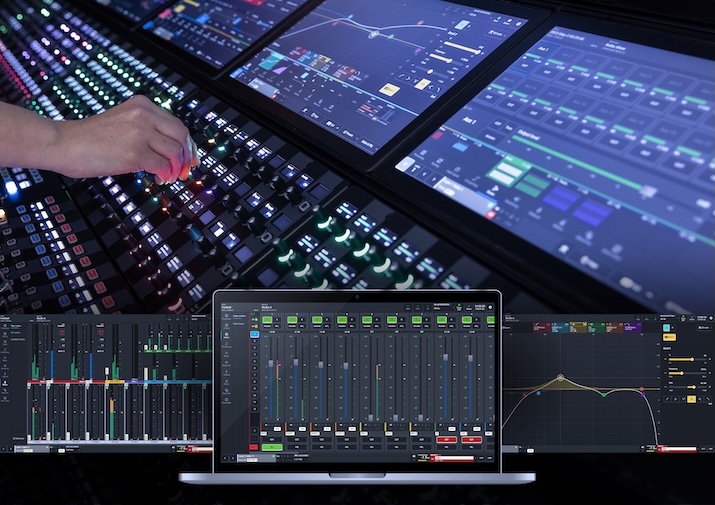
Calrec ImPulseV cloud DSP processing
ImPulseV virtualized DSP software, which can be hosted in a public cloud or an on-premises environment, can be accessed from anywhere in the world. ImPulseV uses the familiar Calrec user interface and can be controlled via the company’s Assist web UI or directly from any Argo– or True Control 2.0–enabled console. Delivering the full Calrec broadcast feature set directly in the cloud with premium audio quality, it reduces reliance on physical hardware. Optimized for low-latency throughput, real-time audio processing, control routing, and mixing, ImPulseV allows resources to be flexed for major sports events. Its cost-effective opex model enables broadcasters to deploy audio-mixing instances as needed to meet the demands of events, such as coverage of second- and third-tier sports, that traditionally aren’t economically viable.
Injecting agility and scalability into any workflow, virtualized processing engines can absorb the additional load of larger presentations. They can be adopted as standalone processors or blended with existing hardware DSP cores, and control of these resources is just as flexible, allowing virtual or physical control surfaces to be used regardless of where they are located.
Evertz
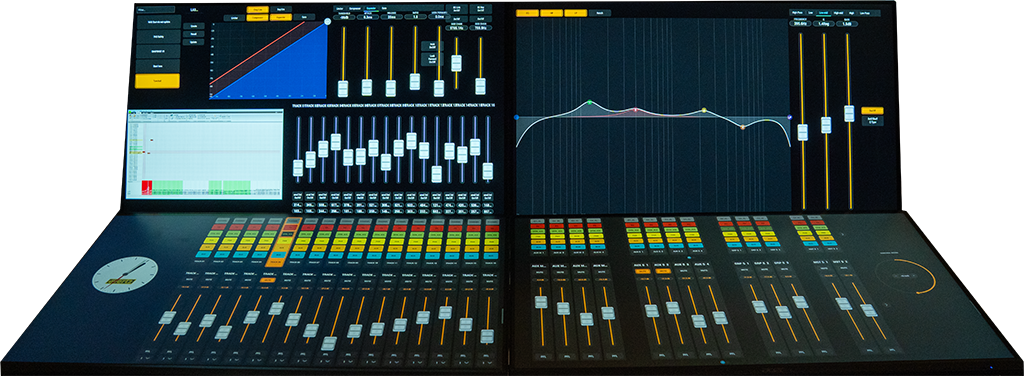
Studer Vista digital mixing consoles are integrated into Evertz’s Software Defined Video Networking (SDVN) platform.
The Studer Audio portfolio continues to expand with new hardware, software, and virtualized solutions. Studer Vista digital mixing consoles are now integrated into Evertz’s Software Defined Video Networking (SDVN) platform, supporting SMPTE ST 2110 and baseband workflows for live production. Enhancements to the VUE Intelligent User Interface include advanced Vista-based controls and functions through the Vista in VUE virtual audio controller, enabling customizable audio workstations. VUE replicates the physical-console interface in a touch-enabled, widget-based, or web-accessible format for local and remote operation connecting to the Studer Infinity Core processing engine and I/O system, preserving the legendary Studer sound. The combination of Studer Vista, MAGNUM-OS, and Evertz multiviewers introduces the Video PFL feature, which delivers an efficient and unified production workflow.
Lawo

Lawo HOME mc2 DSP App
Designed for mc² mixing consoles and controllable from new crystal broadcast mixers and via Lawo’s mxGUI software, the HOME mc² DSP app functions as a virtual mixing system at the press of a button whenever audio processing is required fast. It seamlessly integrates with the HOME Apps platform, which hosts various types of video processing on the same shared COTS hardware. A wide range of IP-based audio edge devices is also available from Lawo. For instance, the A_stage series accommodates high-channel-count I/O in a variety of formats (analog, AES3 digital, MADI), and the single-format A_line devices are usually used in flypacks, mobile remote setups, and locations where only a few sources and destinations are used. Lawo Power Core RP is a modular IP-based I/O node with on-board WAN capability for remote-production scenarios, offering low-latency on-location monitoring.
All Lawo consoles support automation and studio/remote-management applications, including Ember+ and the vendor-agnostic VSM Virtual Studio Manager IP broadcast-control system. For scripted remote productions, Lawo’s Mix Kitchen approach allows A1 engineers to work from home or somewhere on the road.
SSL
With System T Cloud, broadcasters can unlock the full power of System T next-generation, IP-based, network-native broadcast-audio–production platform in a virtualized environment, whether in a public cloud or on premises, eliminating the need for dedicated processing hardware. At the heart of this solution, Virtual Tempest Engine (VTE1) and Tempest Control App (TCA) provide a software-based solution that can be deployed and controlled from anywhere, enabling rapid deployment, on-demand scalability, and cost-efficient disaster recovery. System T Cloud integrates with the entire System T range; hardware control ranging from individual tiles to large-format surfaces can add physical control to the virtual deployment. Integrating with existing IP infrastructures, System T Cloud provides native support for Dante and NDI audio transport. For a remote production, temporary event, or global broadcast operation, System T Cloud allows the audio to be mixed from anywhere with the same intuitive control experience.
Telos Alliance
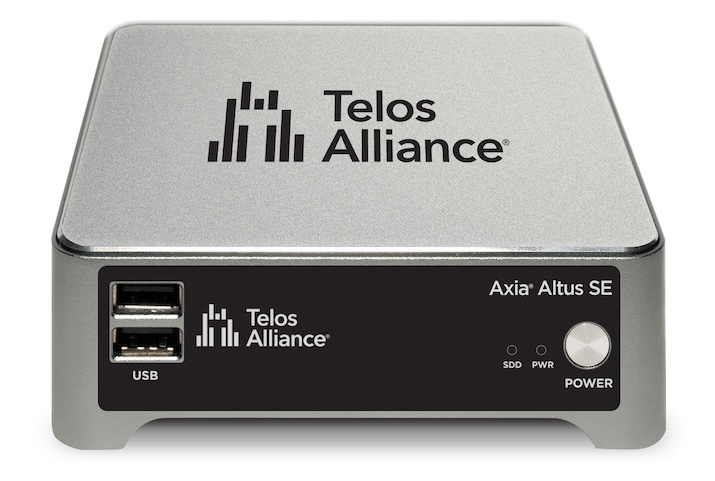
Telos Alliance Axia Altus SE
Axia Altus software-based virtual mixing console brings all the features and functions of traditional Axia AoIP mixers to any desktop, laptop, or tablet with an HTML5 browser. It’s particularly suited to any situation or location where a hardware console isn’t practical or necessary: temporary studios, remote broadcasts, live sports events, standby studios at transmitter sites, dispersed on-air and production talent. Thanks to native Livewire+ AES67 support, Altus seamlessly integrates with other Telos Alliance products, such as Axia Pathfinder Core PRO and Telos VX broadcast phone systems. Integrated and SaaS-based WebRTC options facilitate monitoring and contribution audio. Altus comprises four faders, which can be expanded to 24 in four-fader increments via license keys.
Altus SE offers the same performance and features as Altus but in a compact, silent, and easily installed hardware platform. Eight faders are standard and, as with Altus, can be expanded to 24 in four-fader increments. WebRTC is offered via the Spotlight SaaS option, a cloud-hosted version of the company’s Spotlight signaling server, and, through a separate subscription, STUN and TURN services from its partners at Xirsys.